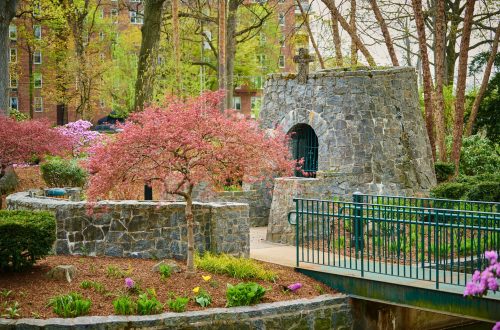
Tarnov, NE: St. Michael’s Church
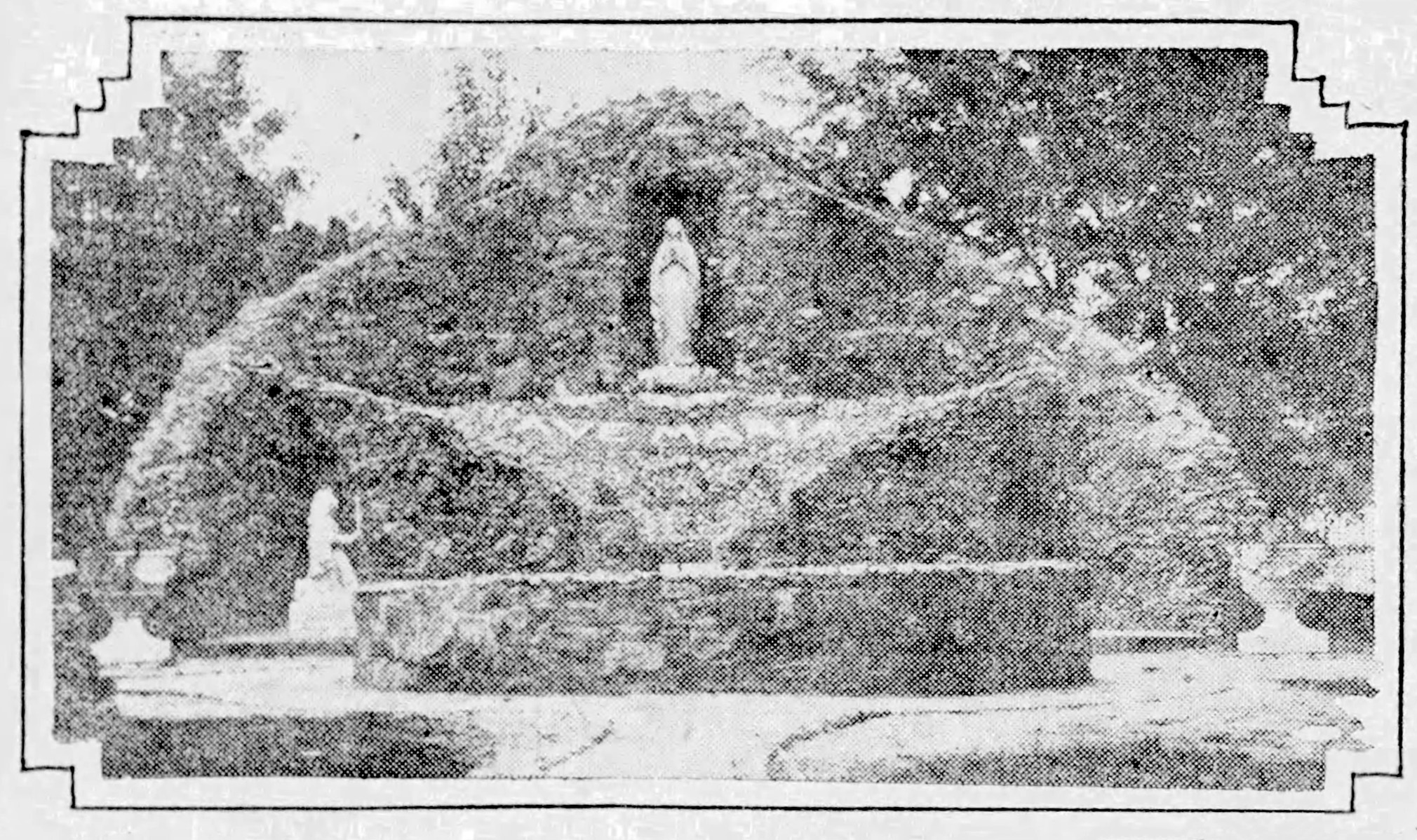
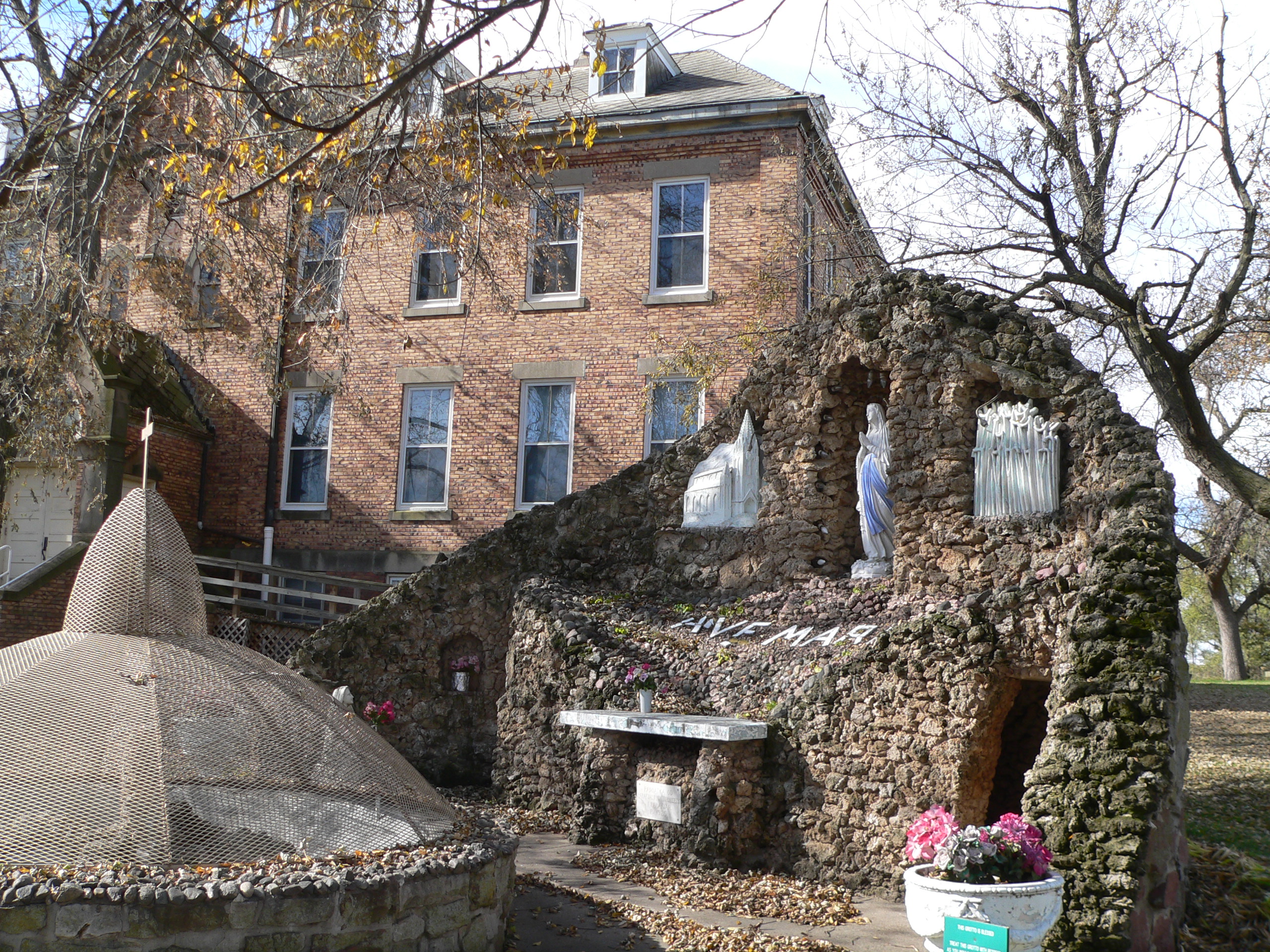
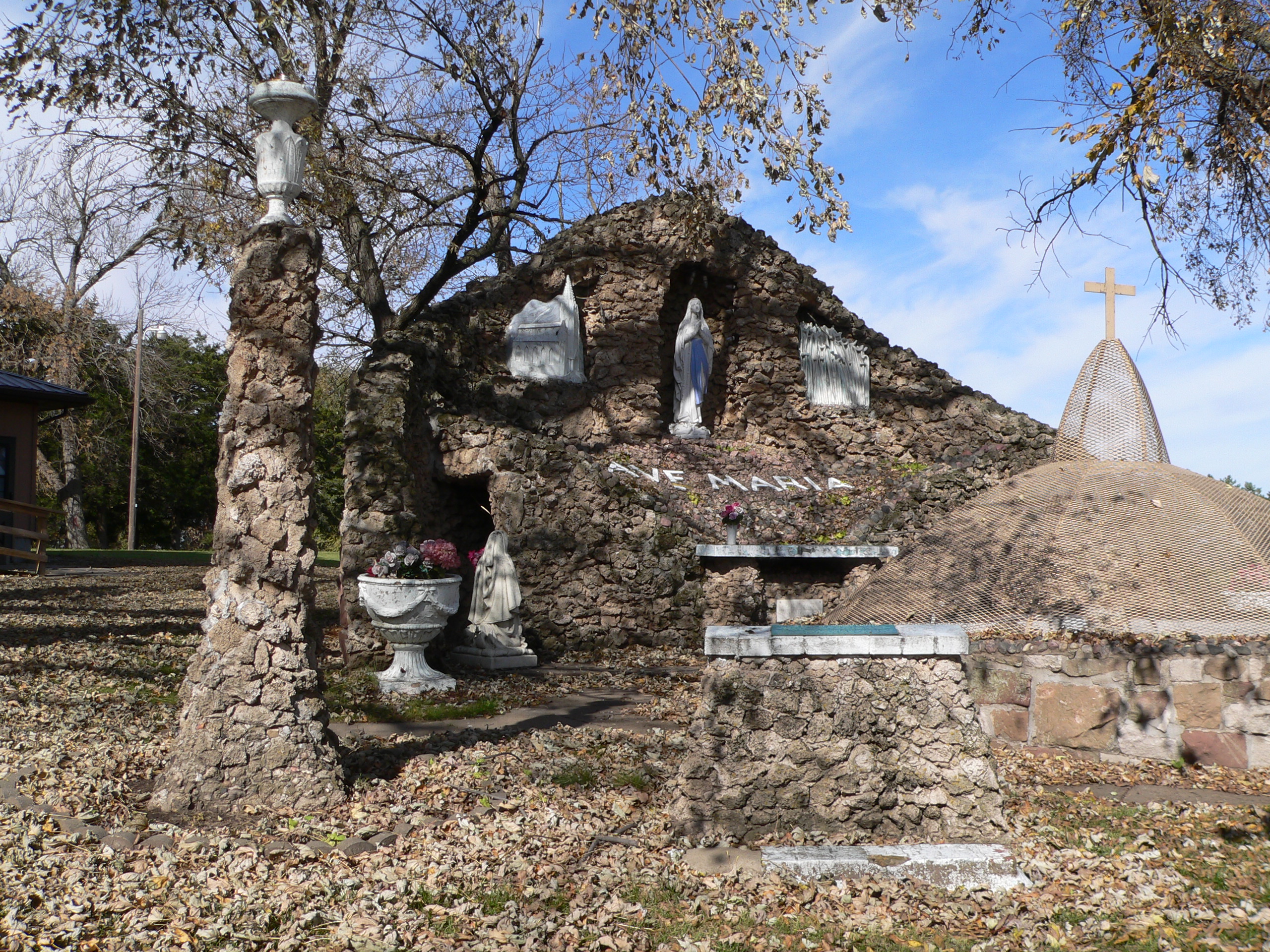
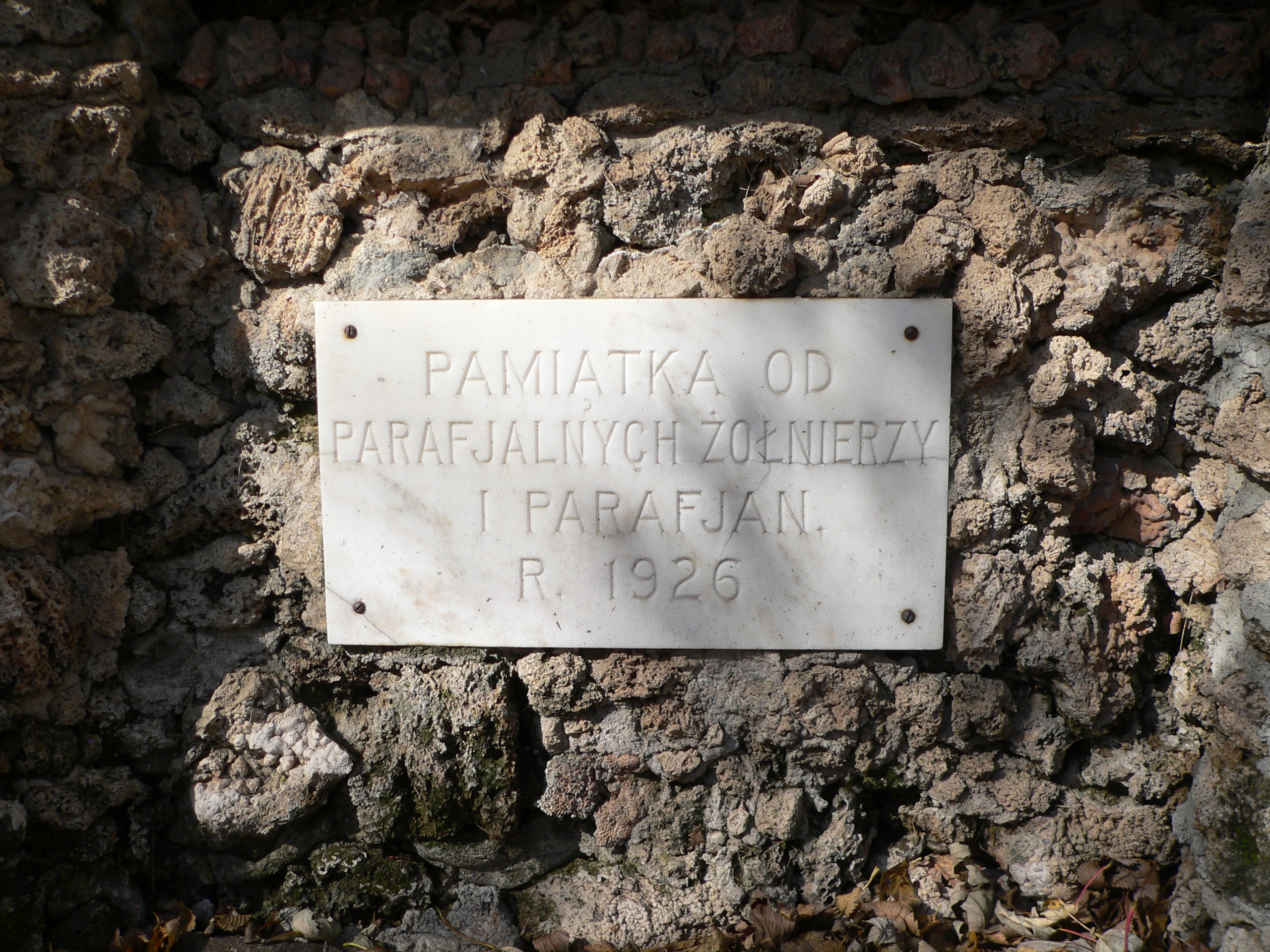
The Memorial Grotto of Our Lady of Lourdes in Tarnov is the oldest still-fully extant grotto that I’ve found in Nebraska.
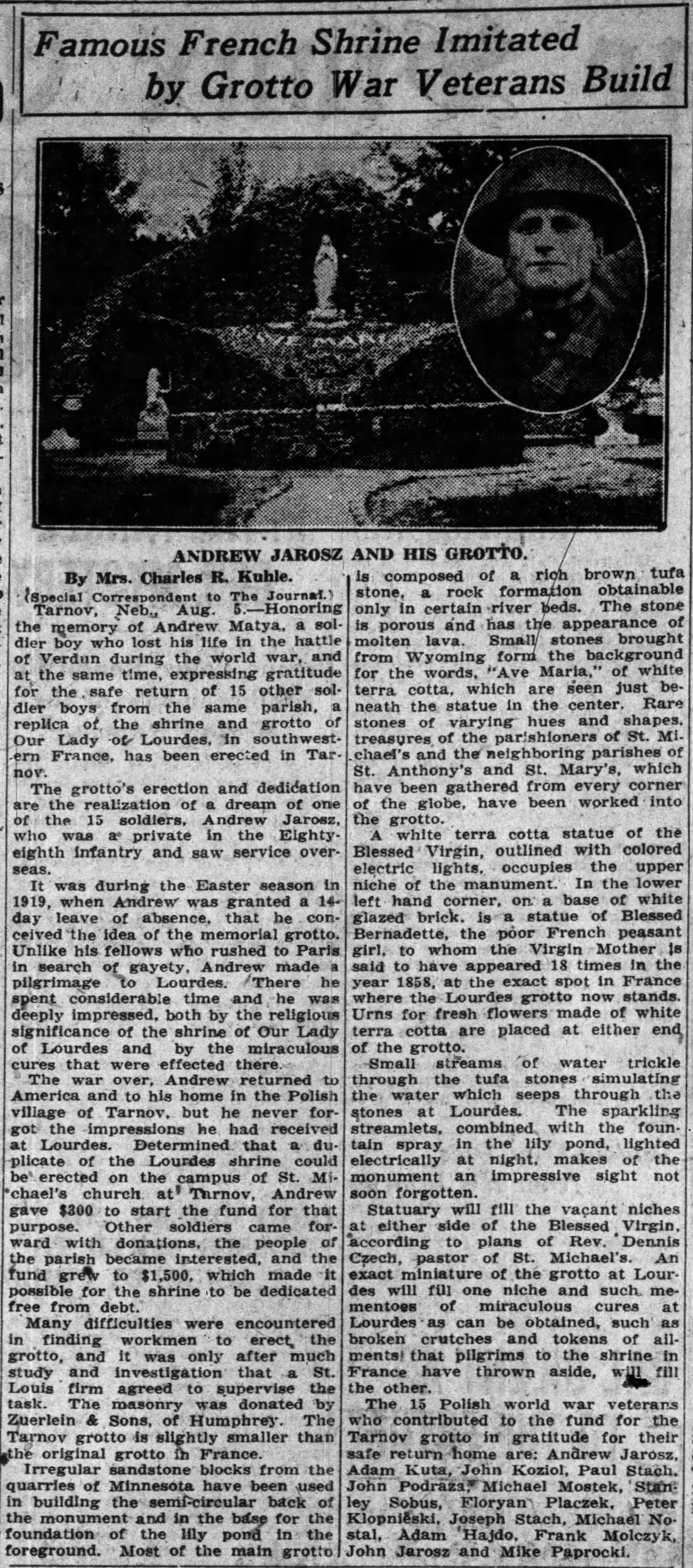
Its construction and dedication were described in many newspapers. One detailed story:
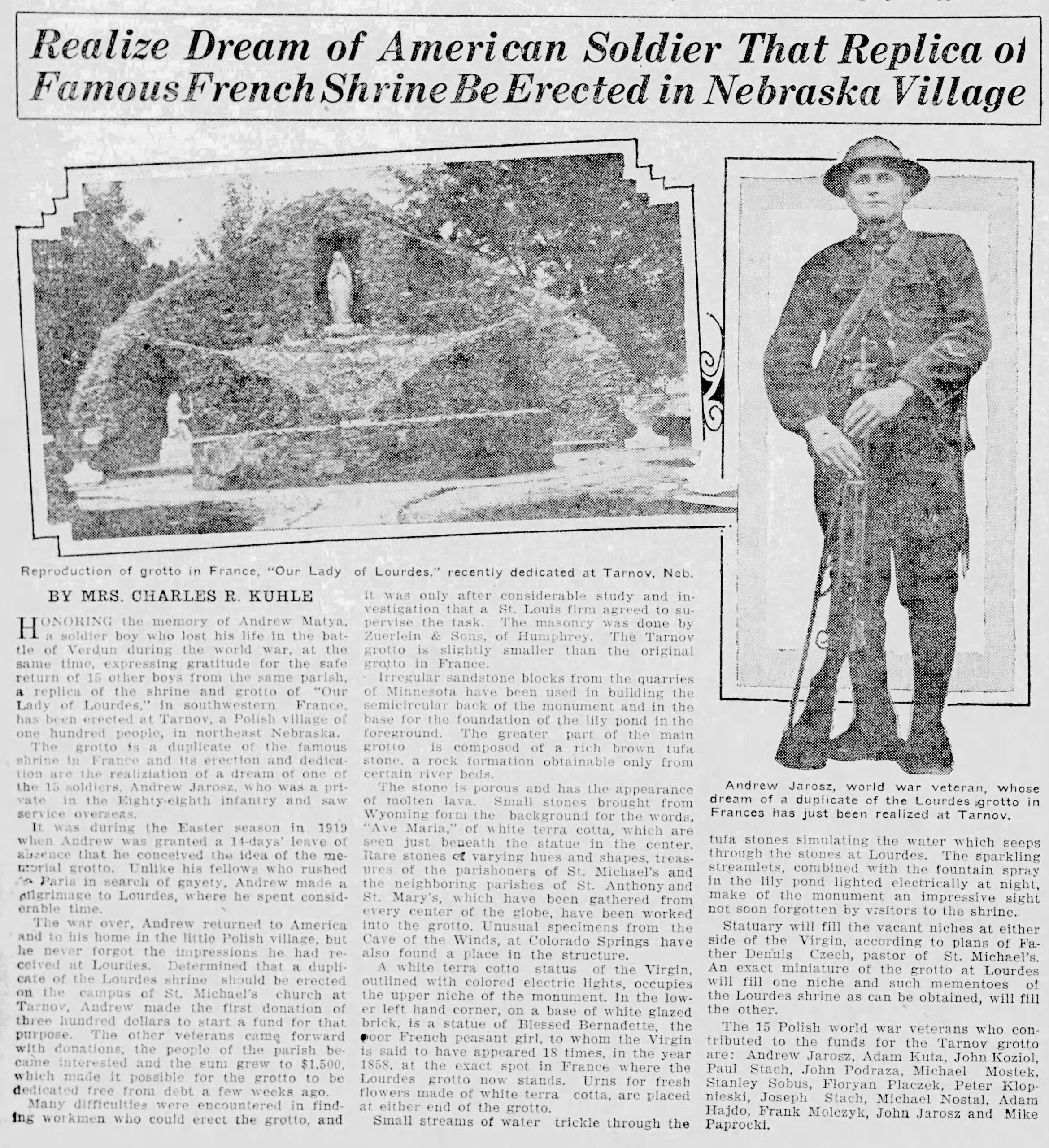
Honoring the memory of Andrew Matya, a boy who lost his life in the battle of Verdun during the world war, and at the same time, expressing gratitude for the safe return of 15 other boys from the same parish, a replica of the shrine and grotto of “Our Lady of Lourdes,” in southwestern France, has been erected at Tarnov, a Polish village of one hundred people, in northeast Nebraska.
The grotto is a duplicate of the famous shrine in France and its erection and dedication are the realization of a dream of one of the 15 soldiers, Andrew Jarosz, who was a private in the Eighty-eighth infantry and saw service overseas. It was during the Easter season in 1919 when Andrew was granted a 14-days’ leave of absence that he conceived the idea of the memorial grotto. Unlike his fellows who rushed to Paris in search of gayety, Andrew made a pilgrimage to Lourdes, where he spent considerable time. The war over, Andrew returned to America and to his home in the little Polish village, but he never forgot the impressions he had received at Lourdes. Determined that a duplicate of the Lourdes shrine should be erected on the campus of St. Michael’s church at Tarnov, Andrew made the first donation of three hundred dollars to start a fund for that purpose….
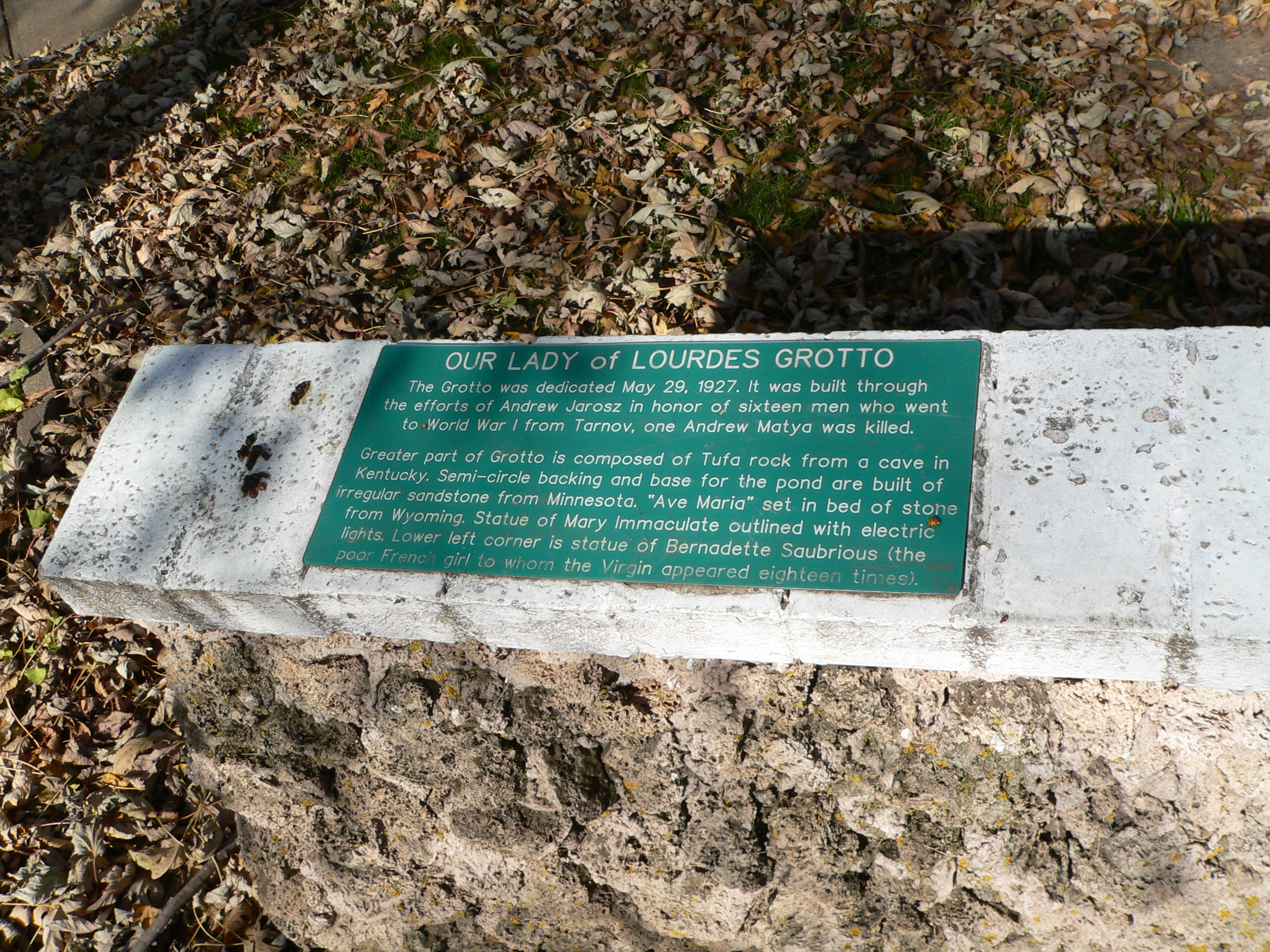
The masonry was done by Zuerlein & Sons, of Humphrey…. Irregular sandstone blocks from the quarries of Minnesota have been used in building semicircular back of the monument and base for the foundation of the lily pond in the foreground. The greater part of the main grotto is composed of a rich brown tufa stone, a rock formation obtainable only from certain river beds…. Small stones brought from Wyoming form the background for the words, “Ave Maria,” of white terra cotta, which are seen just beneath the statue in the center. Rare stones of varying hues and shapes… gathered from every center of the globe, have been worked into the grotto. Unusual specimens from the Cave of the Winds, at Colorado Springs have also found a place in the structure. A white terra cotta status of the Virgin, outlined with colored electric lights, occupies the upper niche of the monument. In the lower left hand corner, on a base of white glazed brick, is a statue of Blessed Bernadette….
Small streams of water trickle through the tufa stones simulating the water which seeps through the stones at Lourdes. The sparkling streamlets, combined with the fountain spray in the lily pond lighted electrically at night, make of the monument an impressive sight not soon forgotten by visitors to the shrine. Statuary will fill the vacant niches at either side of the Virgin, according to plans of Father Dennis Czech, pastor of St. Michael’s…. The 15 Polish world war veterans who contributed to the funds for the Tarnov grotto are: Andrew Jarosz, Adam Kuta, John Koziol, Paul Stach, John Podraza, Michael Mostek, Stanley Sobus, Floryan Placzek, Peter Klopnieski, Joseph Stach, Michael Nostal, Adam Hajdo, Frank Molezyk, John Jarosz and Mike Paprocki. Omaha World-Herald, Sep 4, 1927
The grotto was dedicated on May 29, 1927, and soon drew thousands of visitors to the tiny town of only 80 people at the time. It was mentioned in Nebraska newspapers a number of times through the mid-1930s.
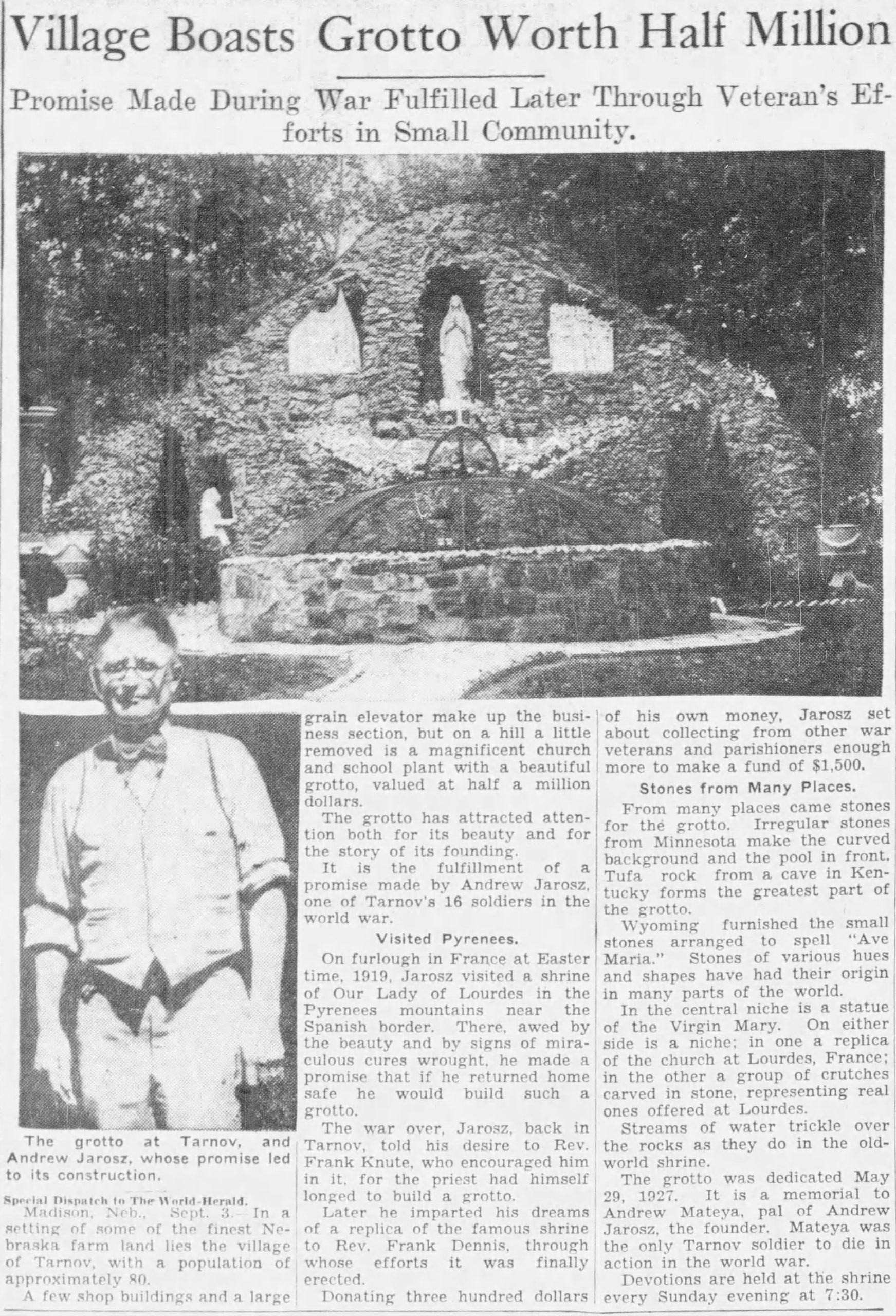
The excitement died down by the mid-1930s (likely due in part to the untimely death of Andrew Jarosz, one of the town’s leaders, in 1934). But the grotto and St. Michael Church, now both on the National Register of Historic Places, have both endured despite the town’s slowly shrinking population (current population: 52). They both remain peaceful, beautiful places of prayer in the town of Tarnov.

You May Also Like
Sloatsburg, NY: St. Mary’s Villa Academy
Schererville, IN: St. Michael Parish