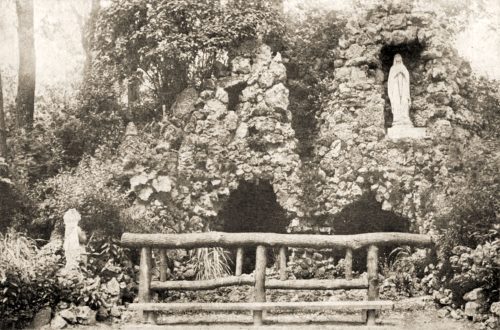
Euclid, OH: Our Lady of Lourdes National Shrine of Euclid
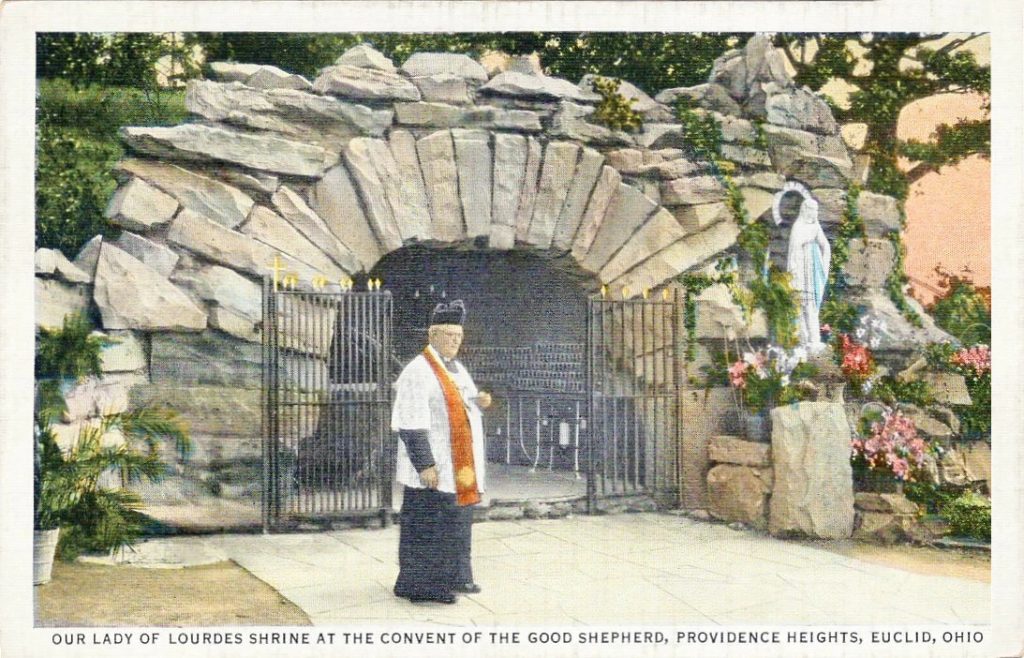
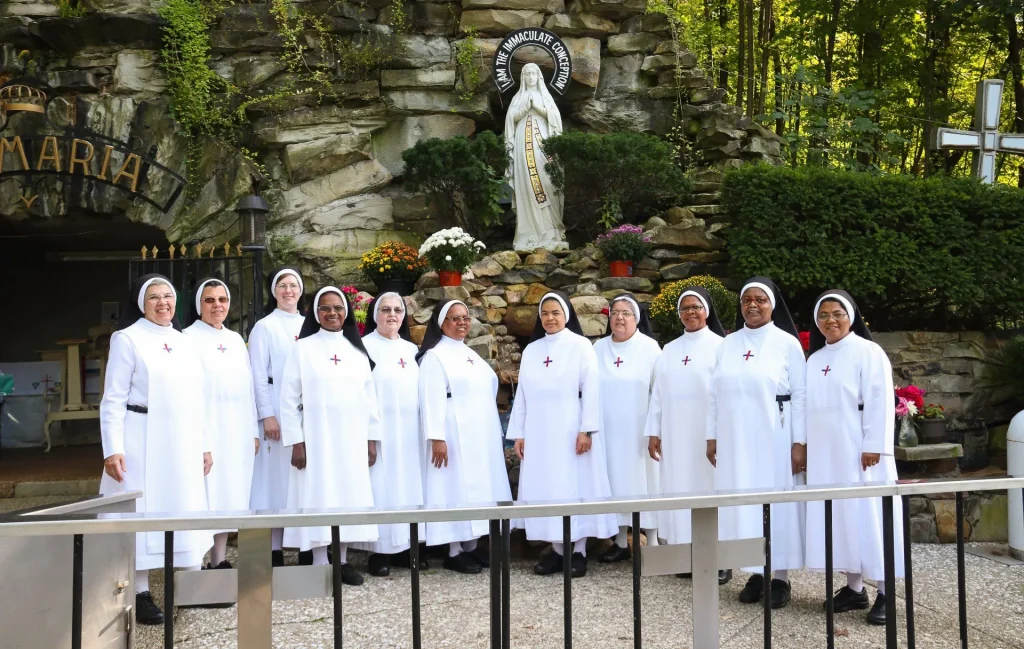
The Our Lady of Lourdes Shrine, which is celebrating its 100th anniversary in 2026, was constructed at the convent of the Sisters of the Good Shepherd in Euclid, Ohio in 1925 and 1926. The sisters purchased the land, previously a vineyard, there in 1920, because their orphanage in Cleveland had become too crowded. According to a 1930 newspaper article:
In 1920 the farm came into the possession of the Sisterhood, which transformed the place into one of the most lovely spots within Cuyahoga county. While this transformation was going on, several of the Sisters made a pilgrimage to the famous Shrine at Lourdes, on the French foothills of the Pyrenees mountains. Praying before the Shrine of the Blessed Virgin, the wish took form in their hearts to erect a duplicate of the grotto on their own hillside of Providence Heights. So, on their visit to their motherhouse in Angers, France, on May 30, 1922, they made a solemn vow, promising Our Blessed Lady to construct a replica of her Lourdes Shrine at home. That they had no funds for the undertaking never worried the good sisters in the least. They knew that the Blessed Virgin would come to their assistance. And in this faith they were not mistaken.
Lake Shore Visitor (Erie, Pennsylvania), Jun 6, 1930
A wonderful book about the Euclid Shrine: Our Lady of Lourdes National Shrine of Euclid (2026) by Joanne Boresz and Jennifer Boresz Engelking, states: “a woman called one evening asking them to pray for a special intention, promising a substantial donation if her request was granted…. Before the week had elapsed, the lady came to the convent and handed Mother Superior a check for $1,000 as a token of her gratitude. Being told the story of the intended shrine, the lady doubled her donation.” ($2,000 in 1925 was worth about $37,000 in 2026 dollars.)
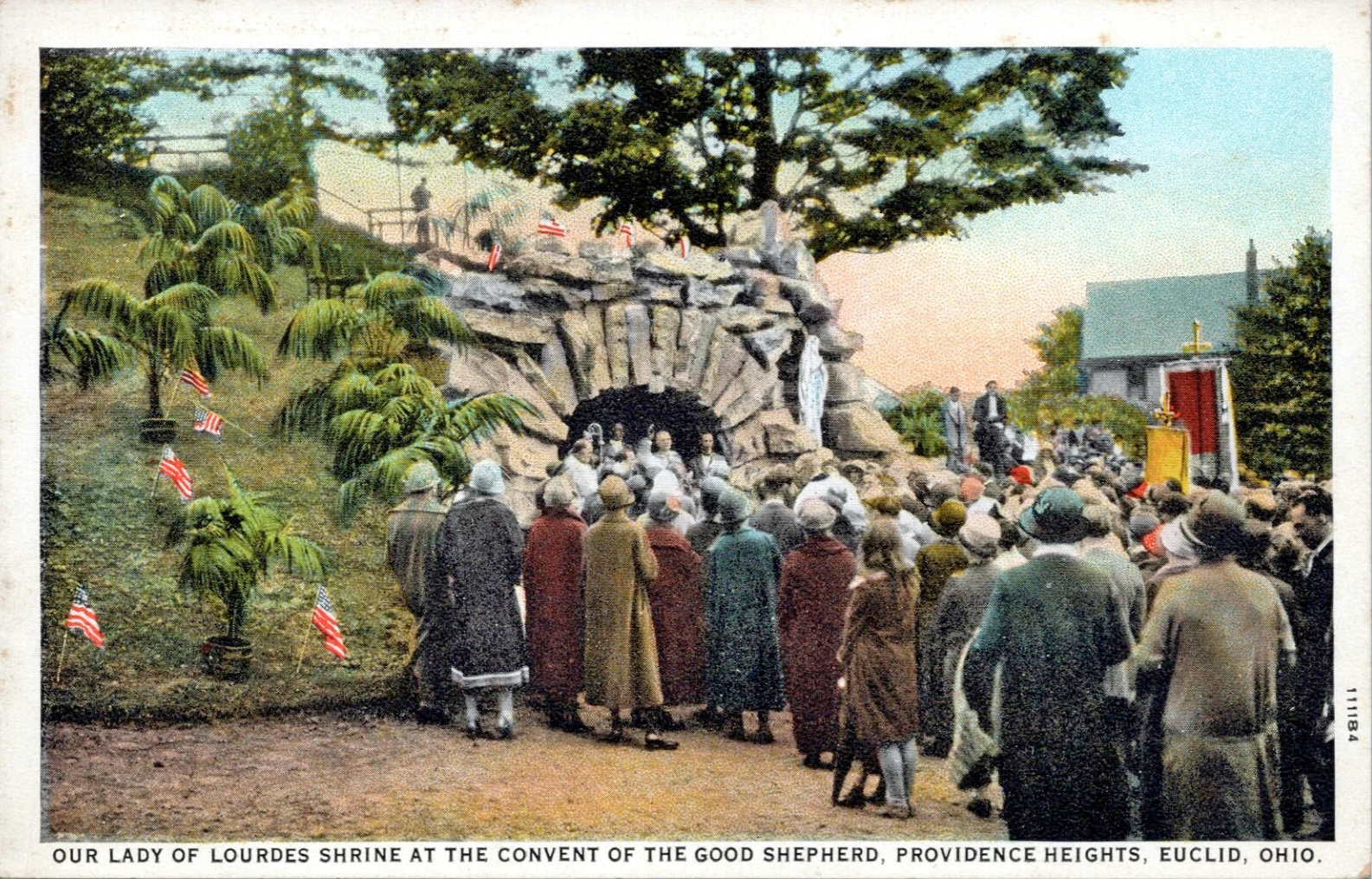
The grotto was dedicated on May 30, 1926 by Bishop Joseph Schrembs, with 5,000 people in attendance:
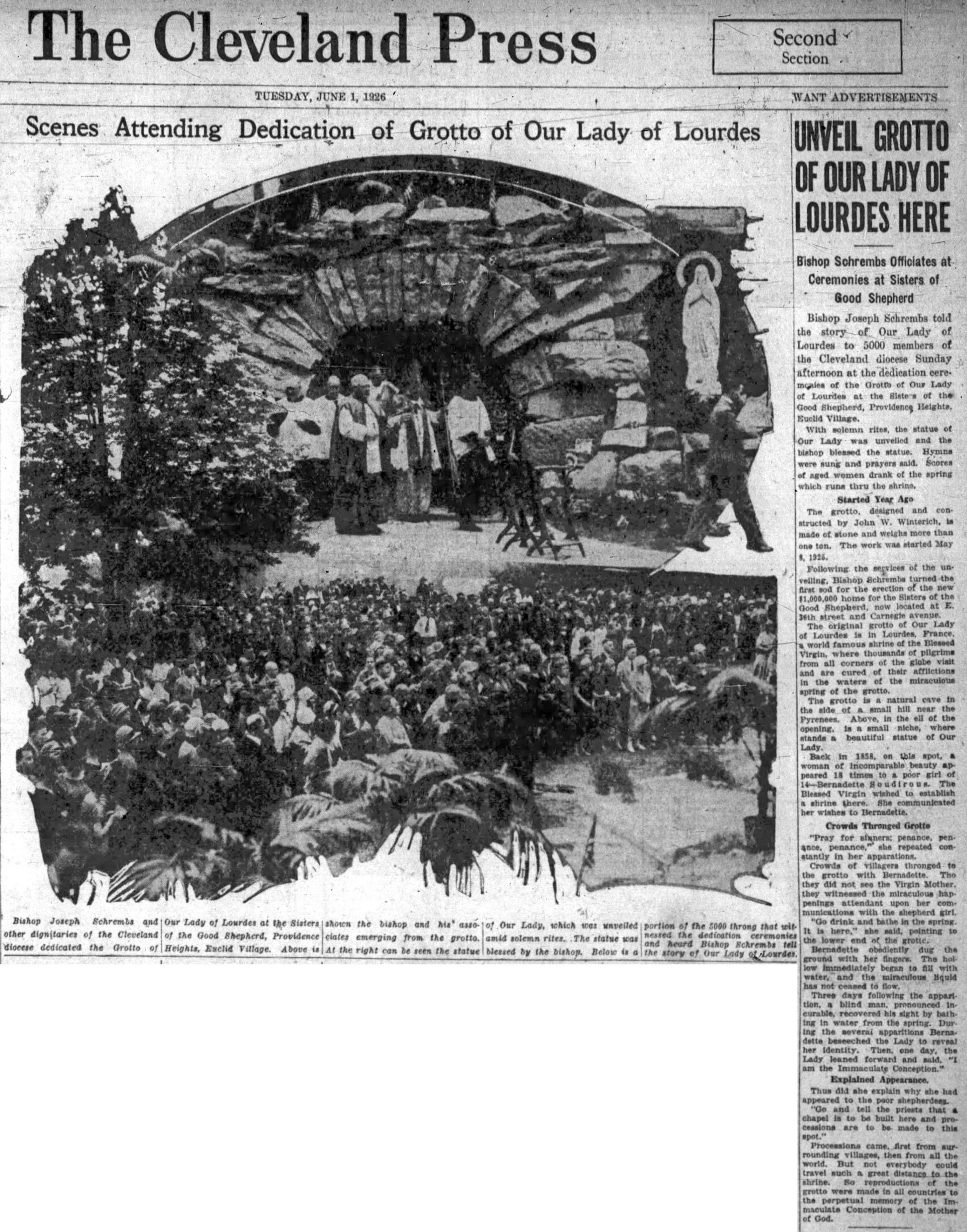
That article stated:
Bishop Joseph Schrembs told the story of Our Lady of Lourdes to 5,000 members of the Cleveland diocese Sunday afternoon at the dedication ceremonies of the Grotto of Our Lady of Lourdes: at the Sisters of the Good Shepherd, Providence Heights, Euclid Village. With solemn rites, the statue Our Lady was unveiled and the bishop blessed the statue. Hymns were sung and prayers said. Scores of aged women drank of the spring which runs thru the shrine.
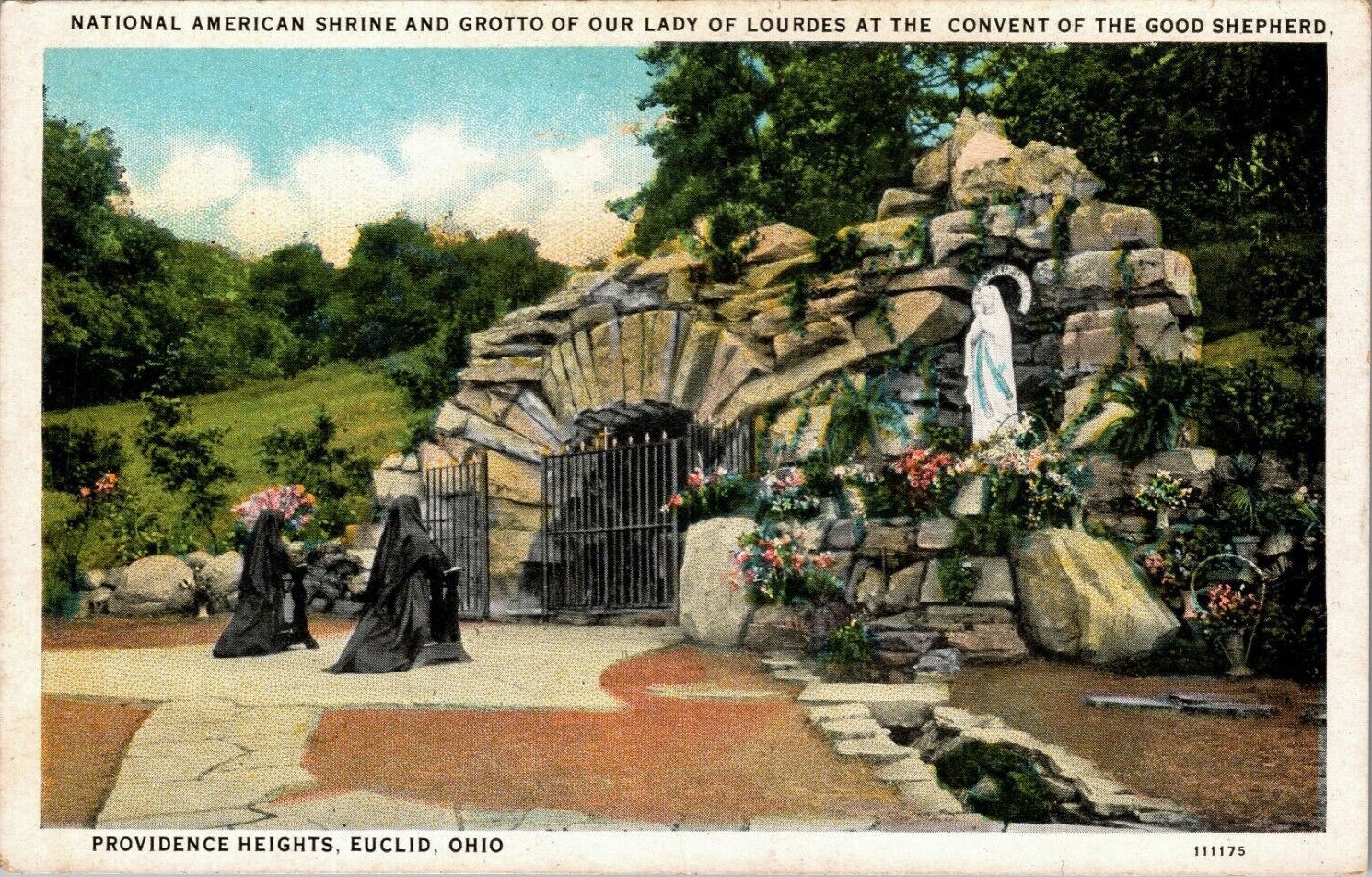
The grotto, designed and constructed by John W. Winterich, is made of stone and weighs more than one ton. The work was started May 8, 1925.
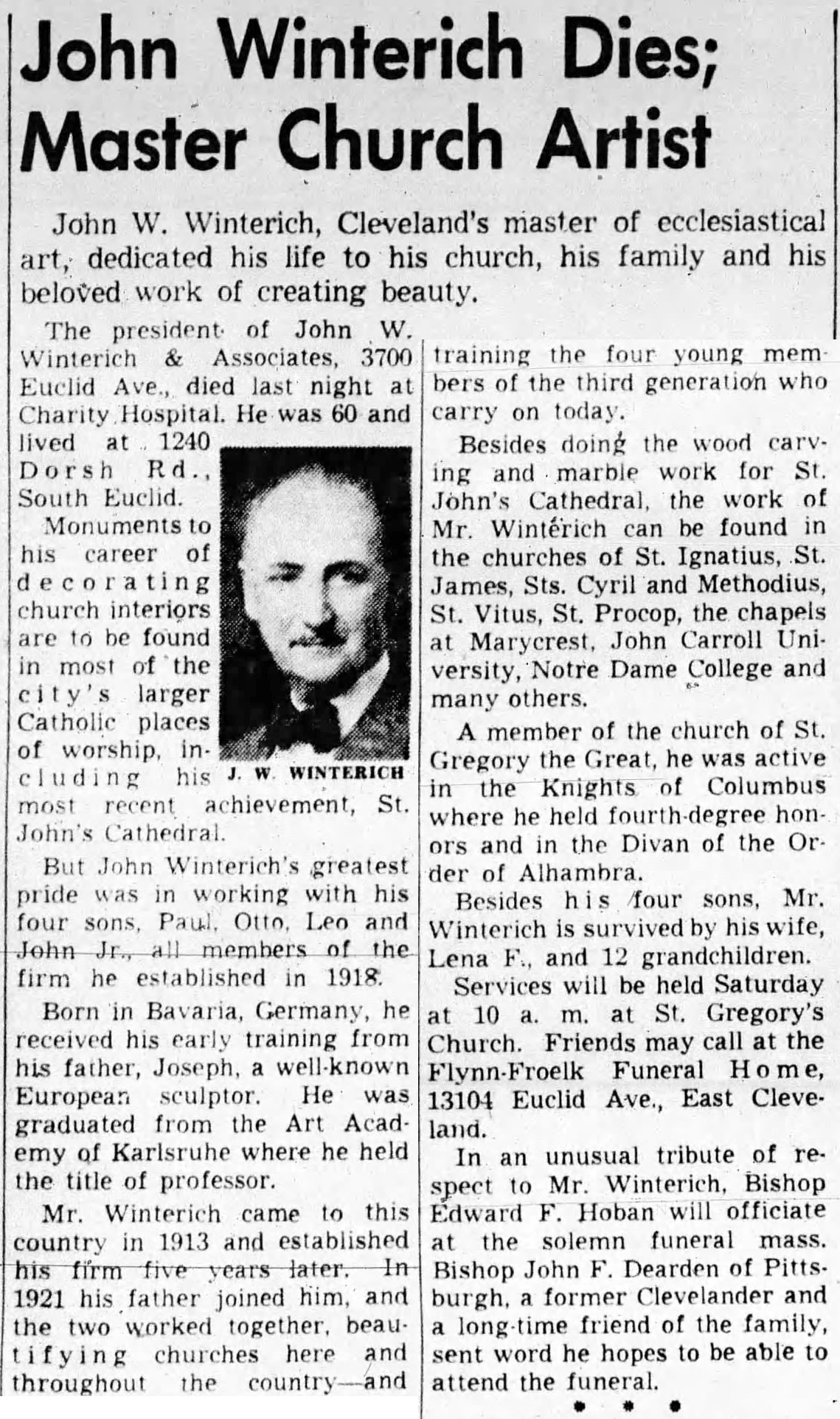
John W. Winterich (1891-1951) was an artist from Bavaria, who in 1920 founded an ecclesiastical art studio in Cleveland with his father, a noted sculptor, which was later joined by his four sons – to his great joy and pride. The firm had a marble studio in Carrara, Italy, and also provided altars, wood carvings, and stained glass windows. The company furnished numerous Ohio churches, including the rebuilt St. John’s Cathedral in Cleveland, and operated until at least the 1980s.
John Winterich also designed the well-known Our Lady of Lourdes Grotto at St. Joseph Church in Mogadore, Ohio, in 1927. For that project, he traveled to Lourdes, France to measure the exact dimensions of the original grotto, in order to replicate it precisely in Ohio.
The 1930 article had a description of the grotto:
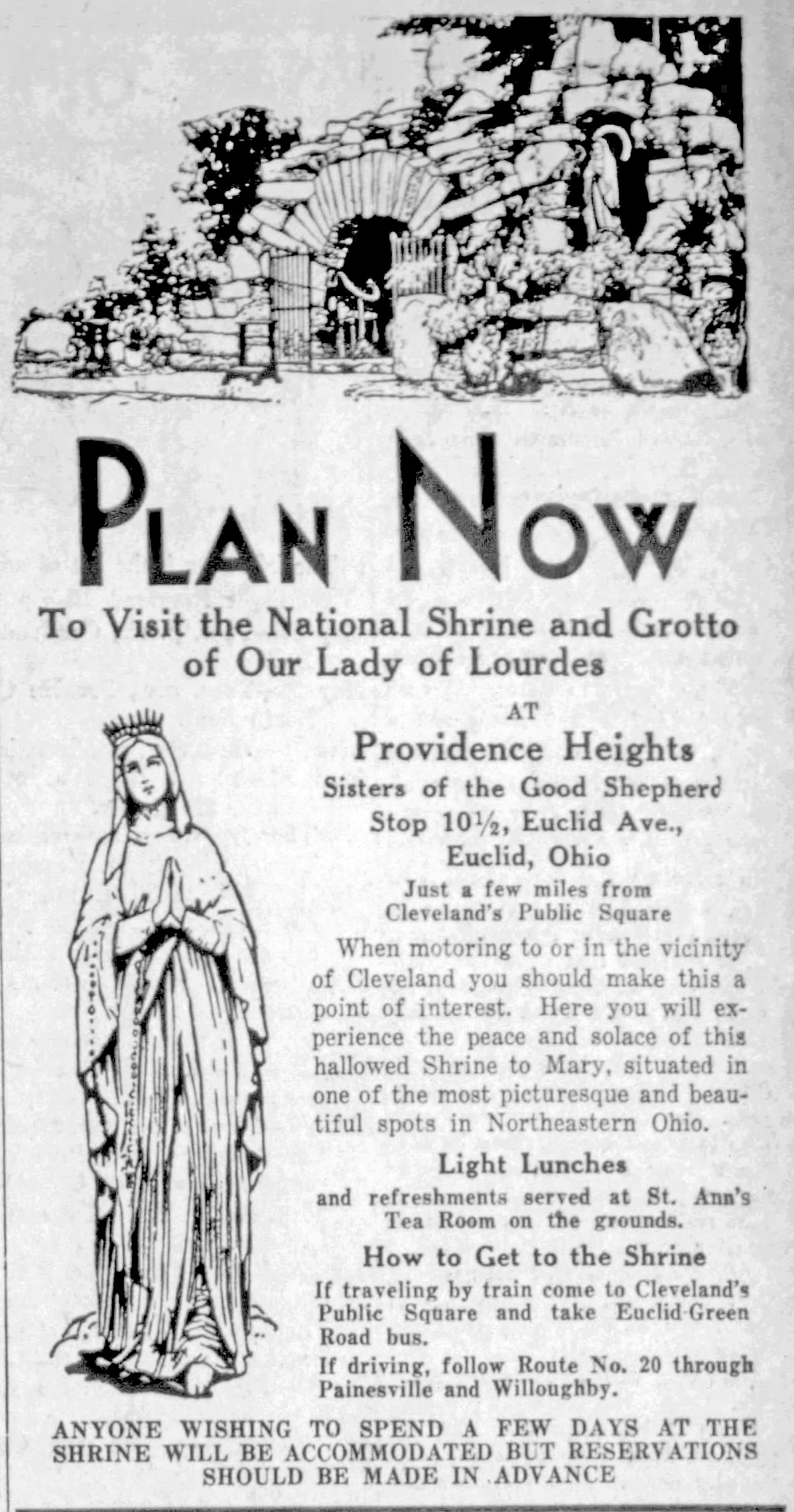
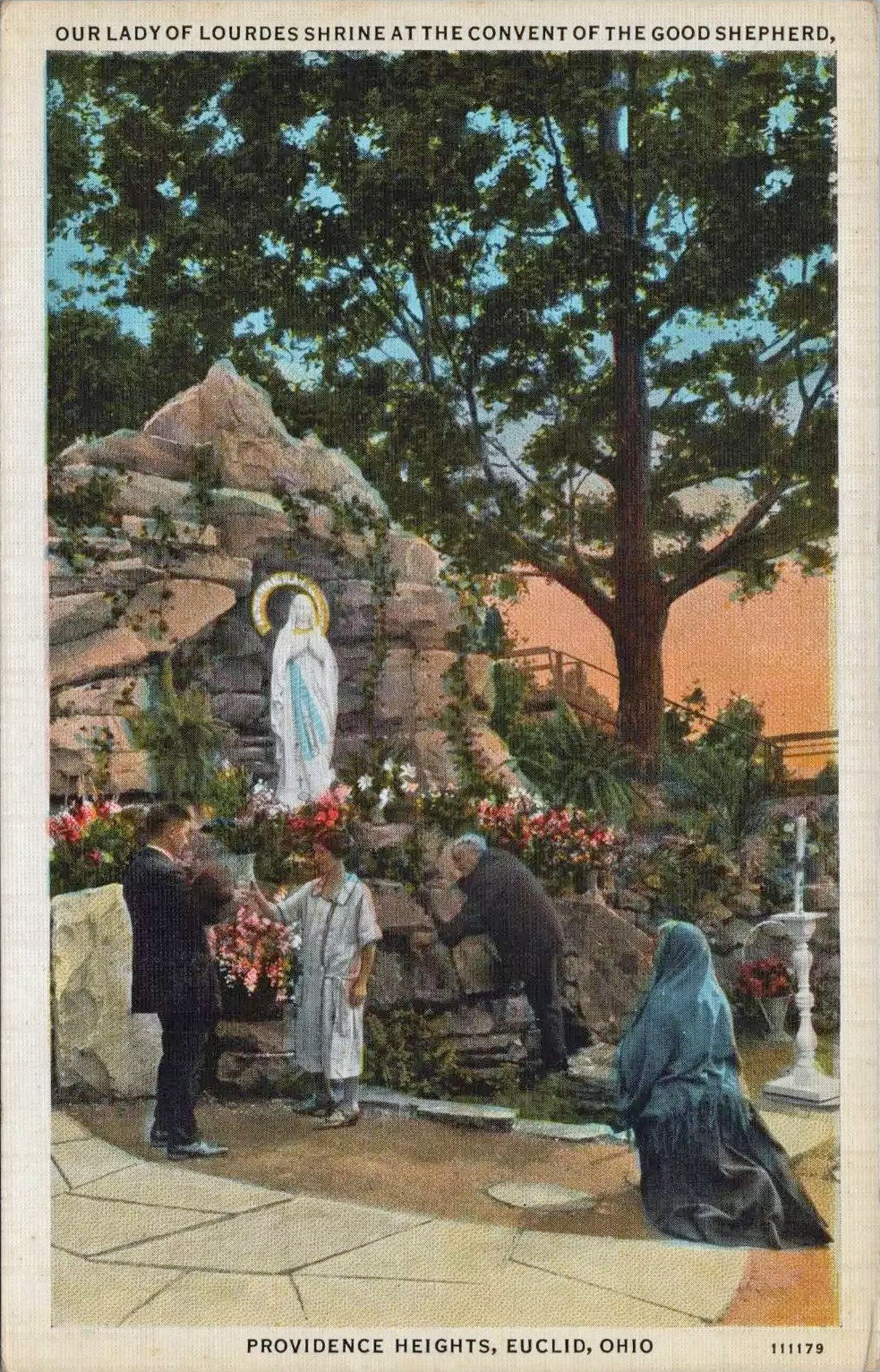
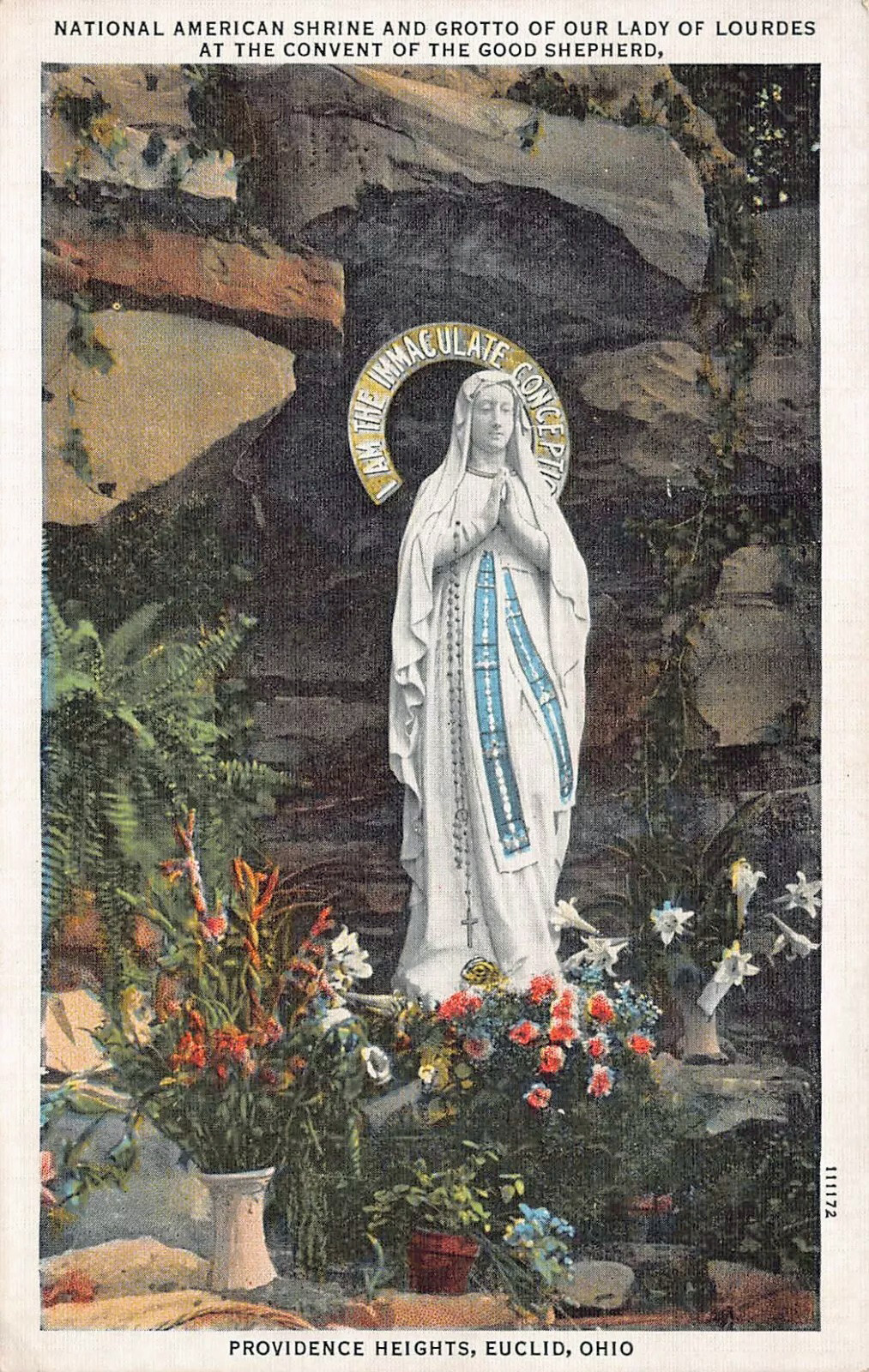
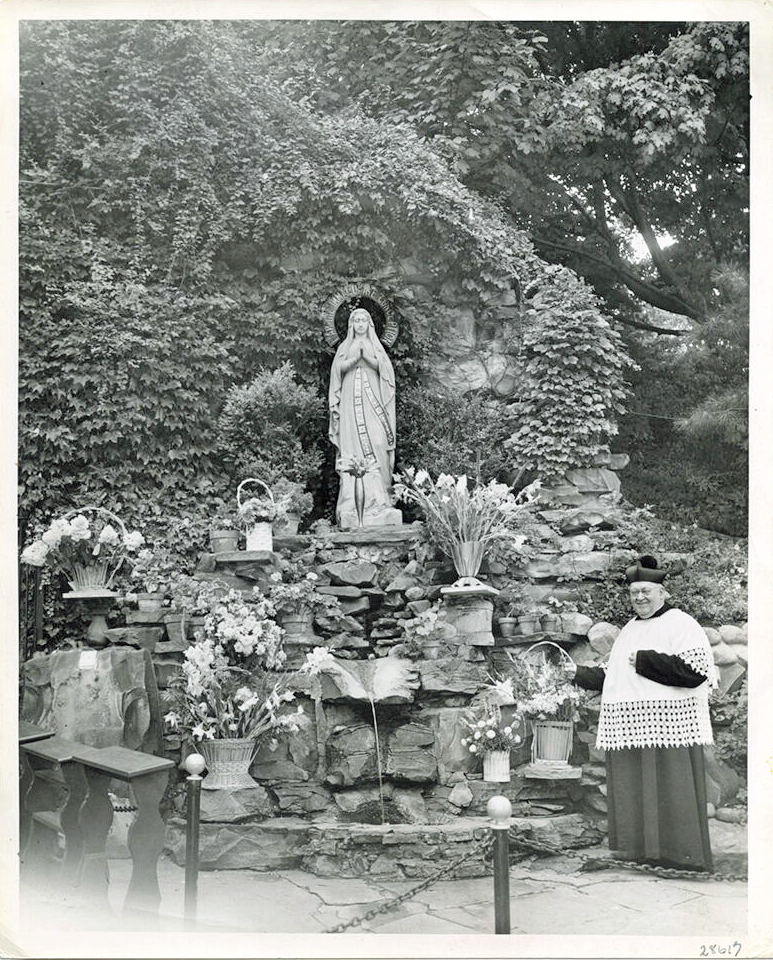
Half-way up the hillside, leaning against a solid rocky background and plainly visible from the avenue and the valley below, is the greatest jewel of Providence Heights, a Grotto, surrounded by a number of artistic statues a replica of the celebrated Shrine at Lourdes. To the right of the Grotto proper stands a beautiful statue of Our Lady of Lourdes, her head surrounded by a halo containing the words, “I am the Immaculate Conception.” In a wide circle around the Shrine are three large angelic figures, while in front the kneeling marble statue of Bernadette turns its face towards the Madonna with an expression of religious exhilaration….
A little stream of water flows from the bowels of the earth, under the feet of the Madonna, into a small basin, and, also directly under the feet of the statue, are imbedded fragments of rock were part of the Lourdes Shrine.
As stated, the water flowing in the grotto originally came from an underground spring. Eventually, city water replaced the spring water, so as to be more sanitary as the city grew around the previously rural site.
That article also mentions that a fragment of rock from the original grotto at Lourdes, France was is embedded in the grotto. According to the Boresz book, three fragments were given to the sisters when they visited the shrine there, and that they had been part of the niche in which Our Lady stood when she appeared to Bernadette, removed when the statue was installed. The water in this Euclid grotto flows over the rock fragment, thus blessing the water flowing into the pool.
Crowds and Pilgrimages
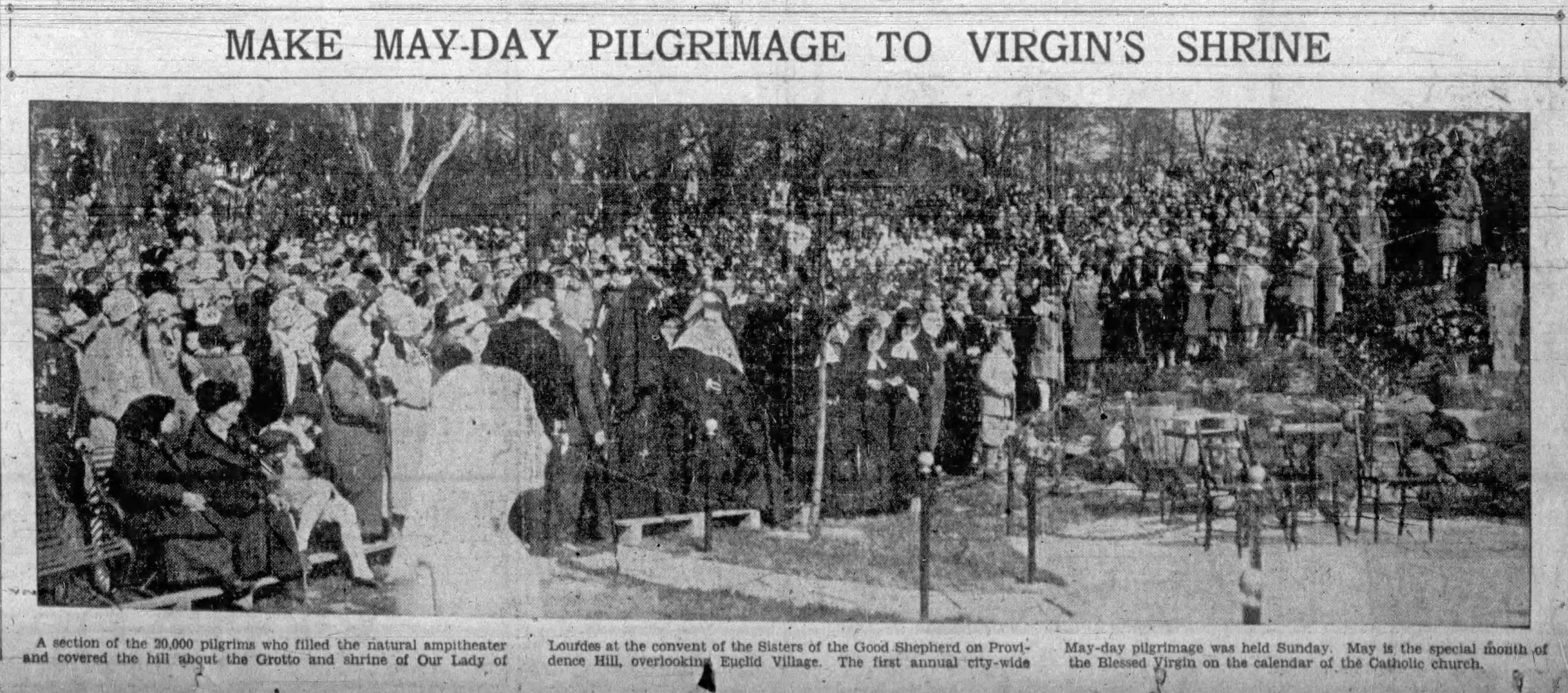
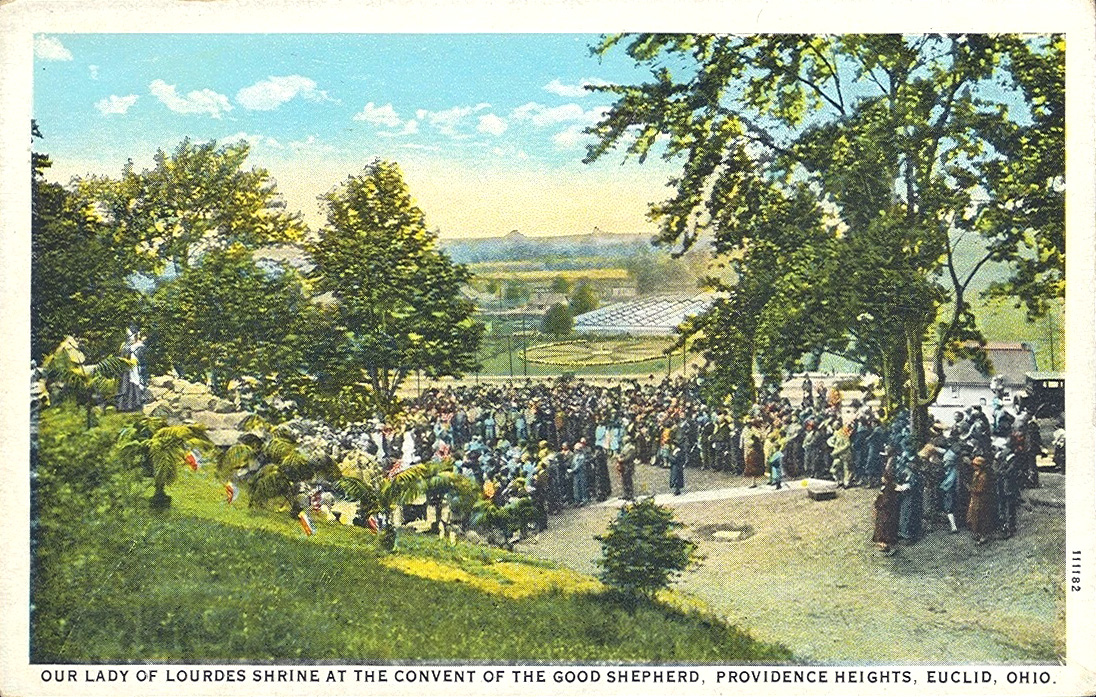
A number of large pilgrimages were made to the shrine in the 1920s and 1930s. A May 1927 article described one pilgrimage:
Twenty thousand of the faithful knelt in homage Sunday to the Blessed Virgin in a great natural amphitheater carved into Providence Heights, Euclid avenue and Chardon road, where the Sisters of the Good Shepherd have created a grotto to Our Lady of Lourdes. The ceremony was Cleveland’s largest religious pilgrimage. It was the first city-wide May Day gathering, executed under the auspices of the Young Ladies’ Solidarities of this Roman Catholic diocese….
Since (the dedication), pilgrims have come in daily streams to visit the shrine, and to drink, to bathe their afflictions, and to carry away the sacred water. Hundreds of thanks in writing for the favors bestowed by the water from the spring have been left with the Sisters of the Good Shepherd. The properties of water at Lourdes have been imparted to those of the spring which flows over the relic from Our Lady’s original grotto shrine.
The natural amphitheater with the shrine in its center. was filled, and, the circling hill was covered over, with the kneeling crowd…. There were two bands. There were laymen almost without number. But more than all, there was the great rise and fall of 20,000 reverent voices, all as one, joined in a single great devotion. There was the sigh from 20,000 breasts as the Blessed Sacrament moved before the shrine at the benediction. And was the stream of the faithful to the spring for phials of the sacred water–a stream which pressed past the spring far into the evening. Six acres of automobiles, parked in the rear, brought part of the crowd.
The Cleveland Press, May 2, 1927
National Shrine
The Shrine was elevated to the status of a National Shrine on Sunday, October 7, 1928 when Archbishop Joseph Schrembs declared: “In as far as I have the authority, I name it the National Shrine of Our Lady of Lourdes, and I bespeak for it the patronage and the cooperation of the Catholics of the entire country,” according to a 1942 article.
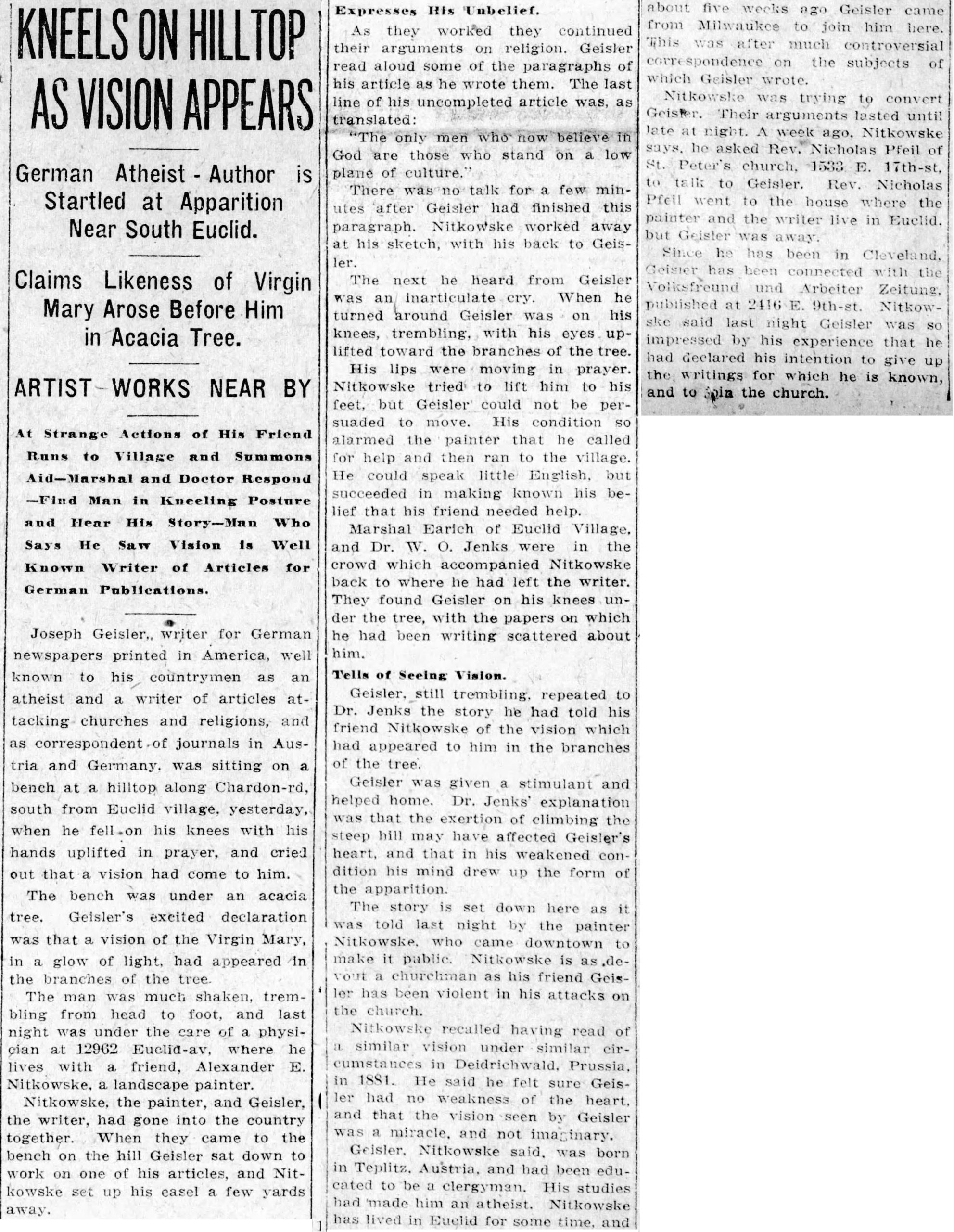
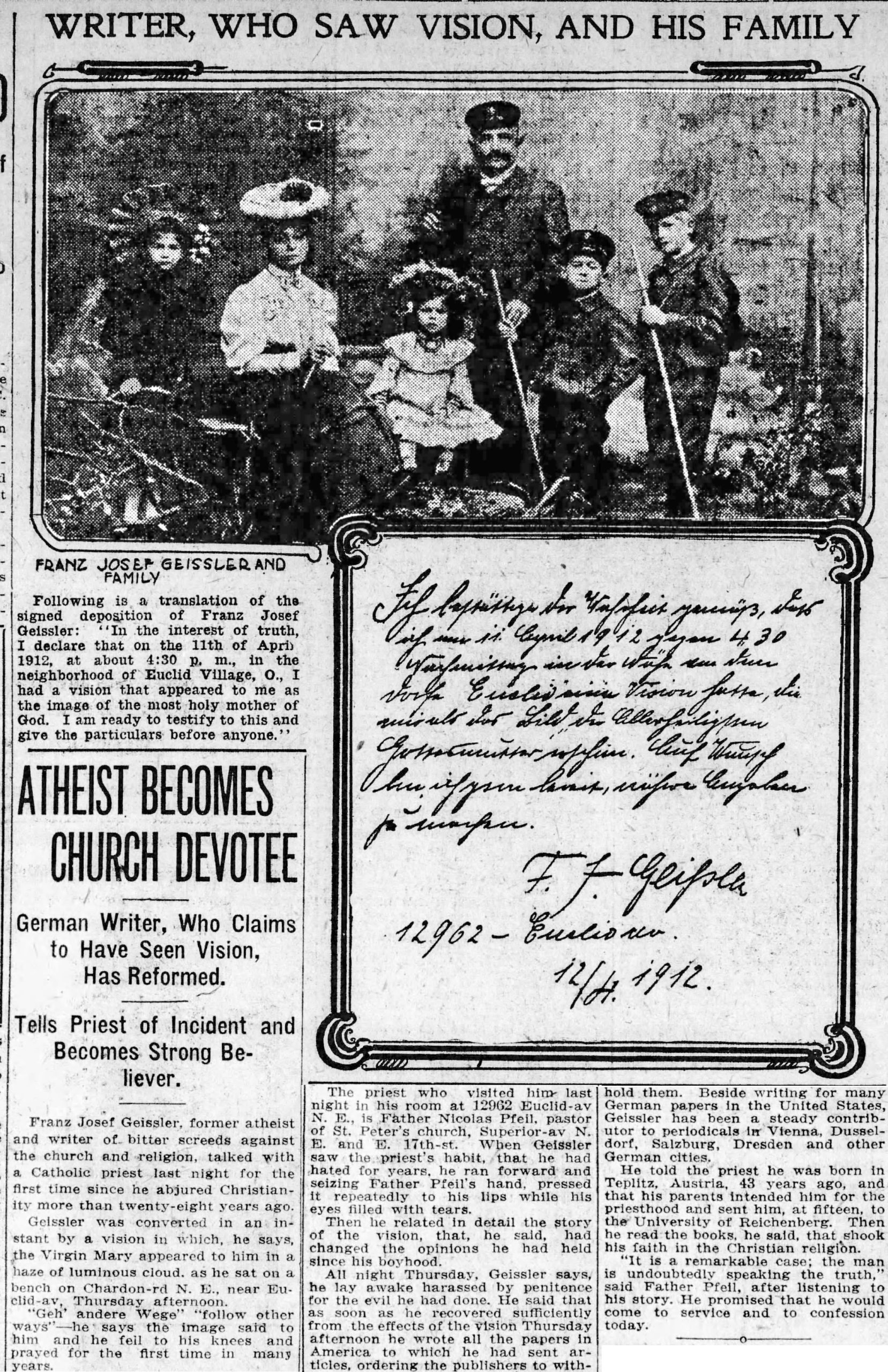
The Boresz book states that this was due to the Mother Superior making the case that two Marian apparitions had occurred on the site before they purchased it: One in 1870, when Our Lady appeared to the wife of the vineyard owner several months before her death; and another in 1912, when a German man — an atheist writer known for attacking the Church — saw Our Lady surrounded by a bright light. She told him to “Geh andere Wege” (“Follow other ways”). The man fell to his knees in prayer and became a devout believer:
Sisters of the Most Holy Trinity
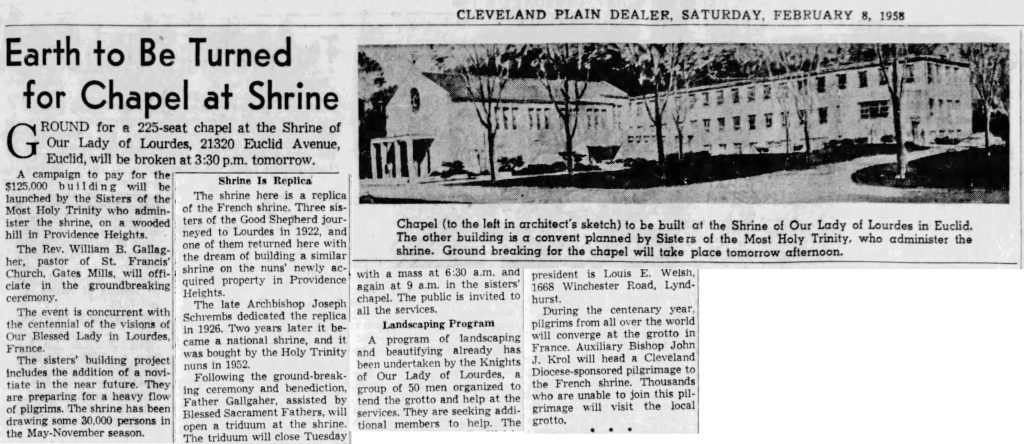
The Sisters of the Good Shepherd later wished to build a high school there, but were told that the land wasn’t suitable for such a large building, so in 1950 they sold the site to the Sisters of the Most Holy Trinity, who still manage the shrine.
Over the years other features were added to the property, including a beautiful chapel, convent, Rosary Hill, Stations of the Cross, the St. Ann Dining Hall, a prayer labyrinth, and gift shop.
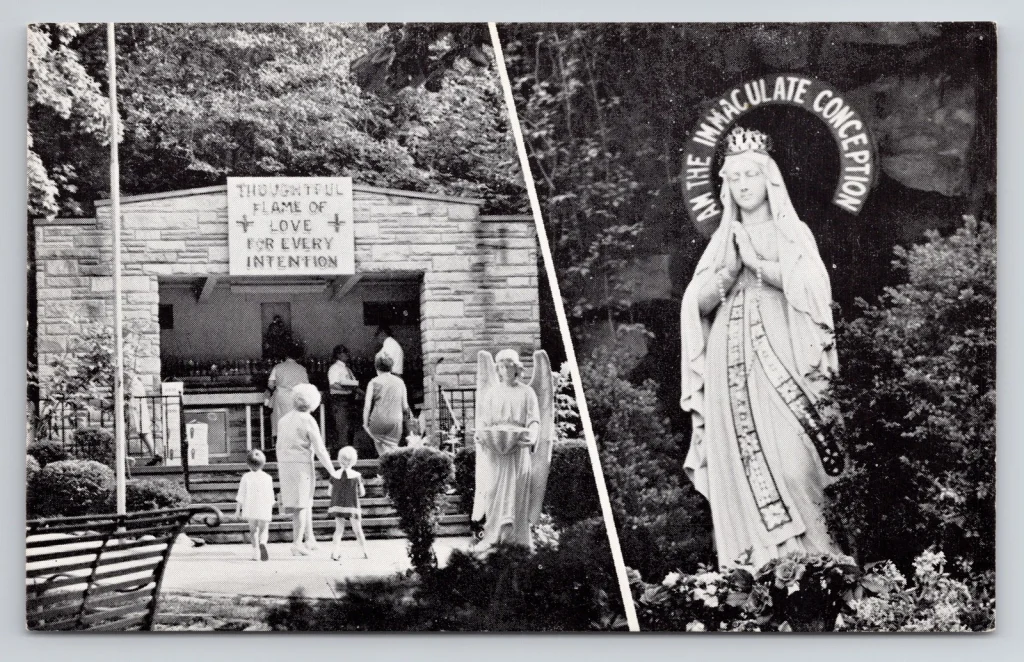
Today, the Our Lady of Lourdes National Shrine of Euclid continues to be the site of many events: open-air masses, rosary sessions, retreats. And of course, it welcomes thousands of visitors who simply pray and find solace at this lovely spot that has honored Our Lady for the past century.
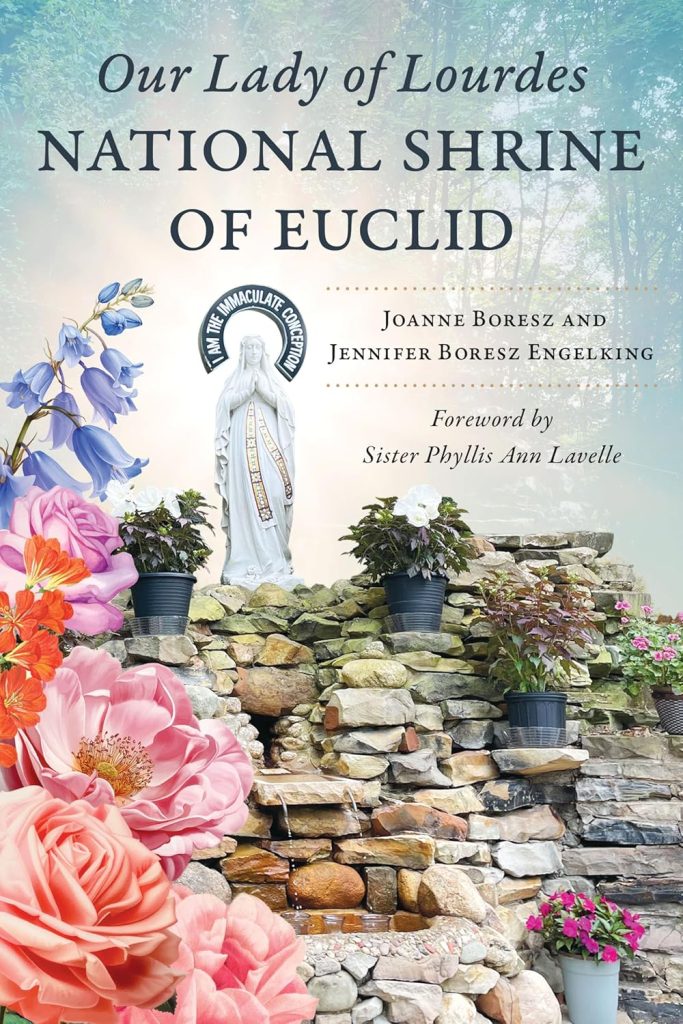
Our Lady of Lourdes National Shrine of Euclid by Joanne Boresz and Jennifer Boresz Engelking (mother and daughter) is a wonderful account of this special spot, and is available at Amazon.com. Highly recommended. From my own review of it:
“Reading about the many people who have prayed and cried and found healing at this beautiful spot was tremendously satisfying. In the preface, the authors (mother and daughter) relate their own five-generation family history at the grotto. They clearly were just the right people to write this celebration of the 100 years of blessings, intercessions, and spiritual peace experienced by the many thousands of visitors to Our Lady of Lourdes National Shrine of Euclid.”

You May Also Like
Epworth, IA: St. Paul’s Seminary
Tucson, AZ: Mission San Xavier Grotto