The Bronx, NY: St. Lucy Church
St. Lucy Church was built in 1937 under the direction of Msgr Pasquale Lombardo, who was directed by the diocese in 1927 to begin a new parish in the Bronx, according to the church website.
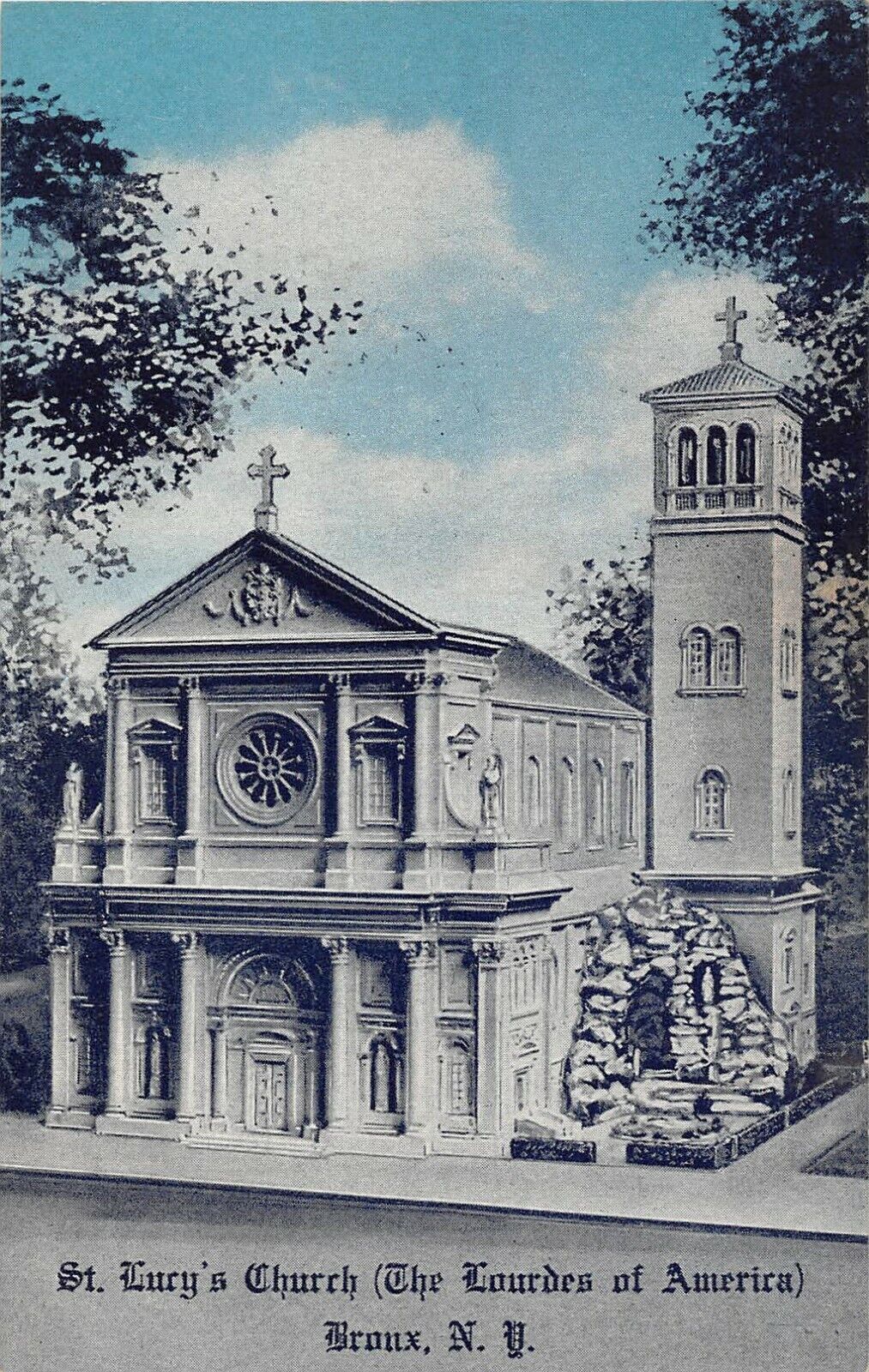
Msgr. Lombardo had travelled to Lourdes, France and been so impressed with the original Grotto, that even before his church had been built, he evidently planned to build a grotto next to it, to be named “The Lourdes of America” (despite the 1,000+ other Lourdes grottos already built here–perhaps a bit of Bronx-Italian swagger, or just NYCers’ unawareness of anything west of them). His plans are evident from an early postcard (below left) depicting a planned design for a two-story classical Italian Romanesque church with a four-story bell tower. Only one story, no tower was actually completed.
The grotto on that postcard was depicted remarkably accurately, before it or the church were built, showing that Rev. Lombardo had firm plans for the design for the grotto before it was built.
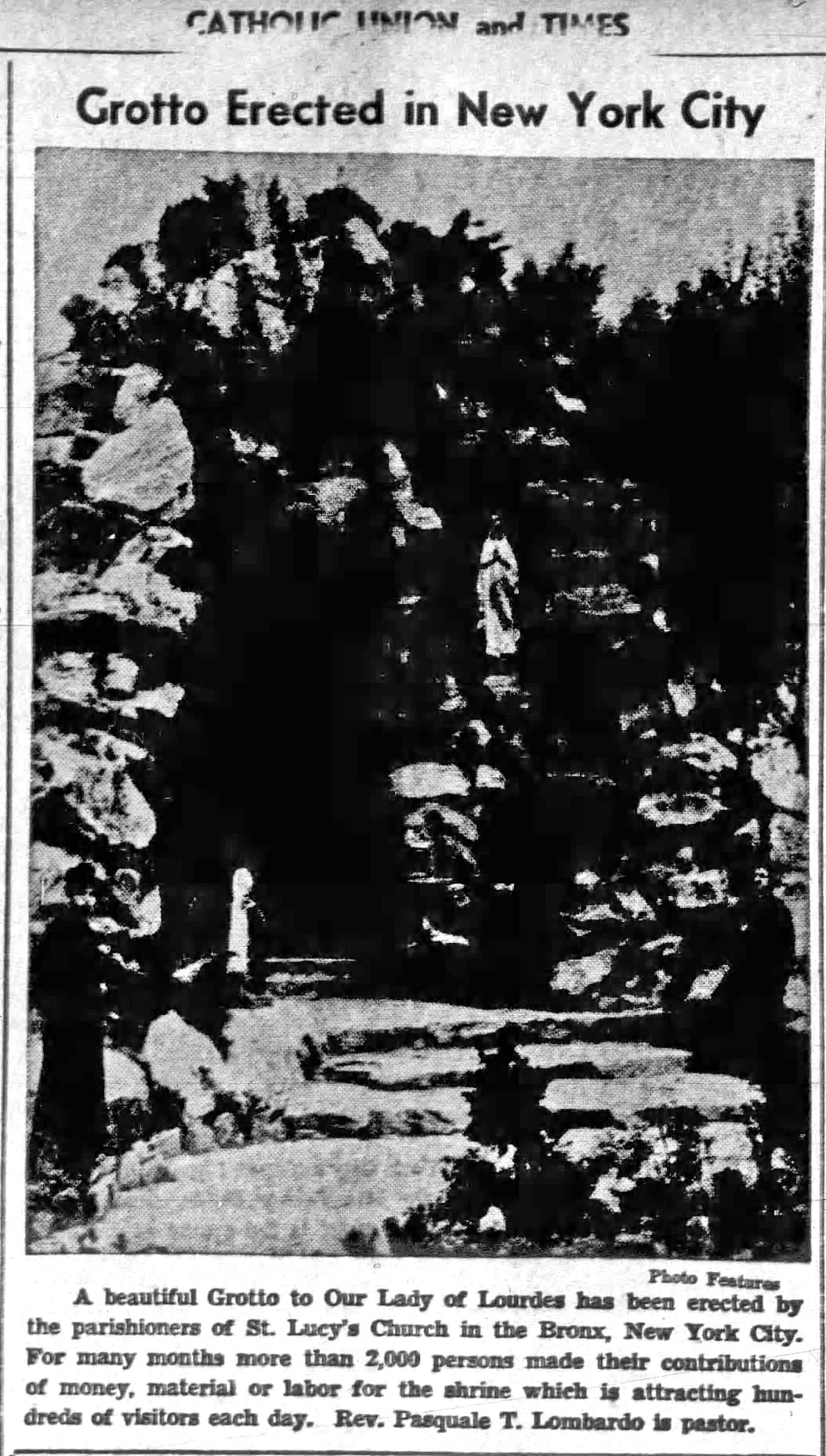
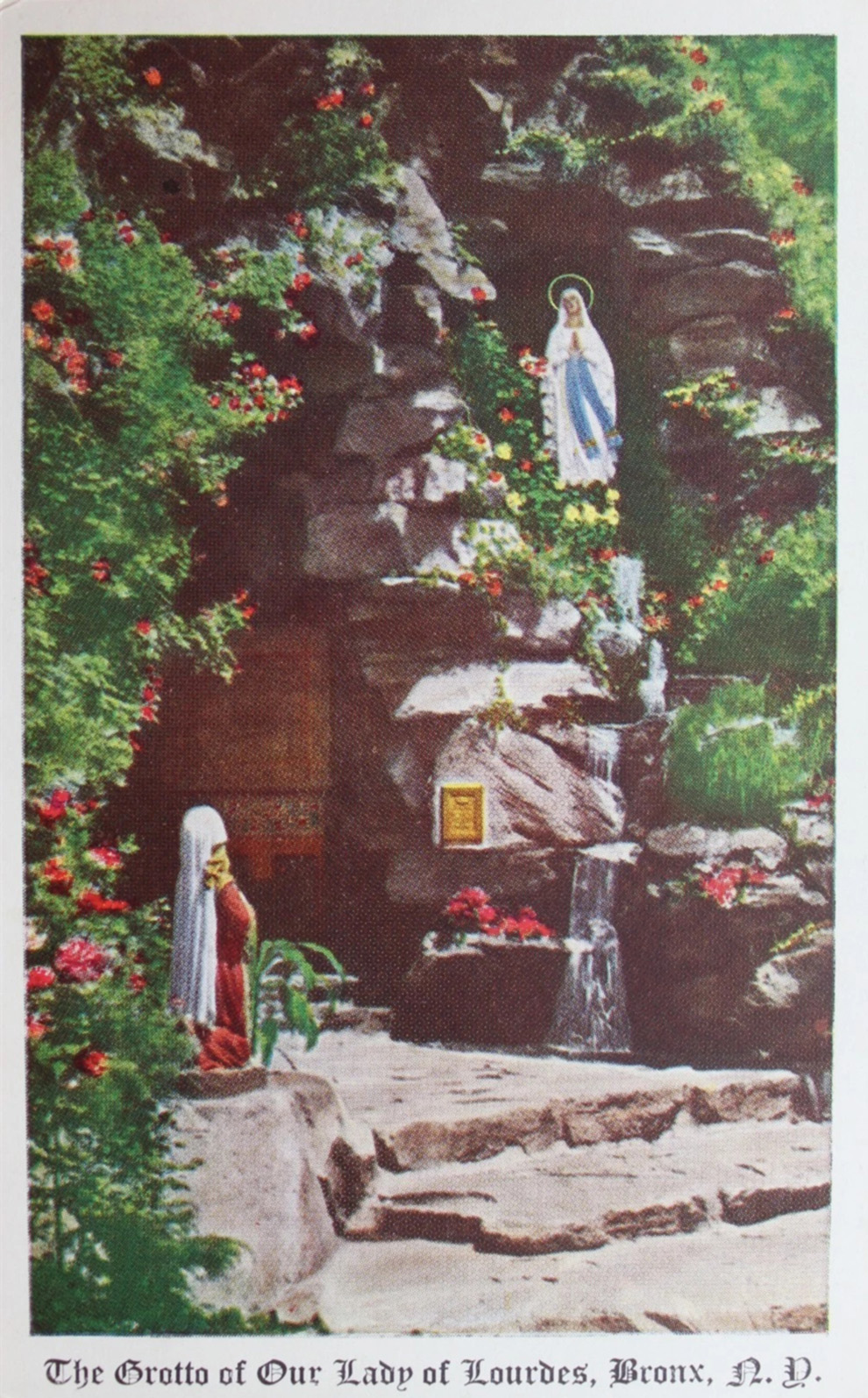
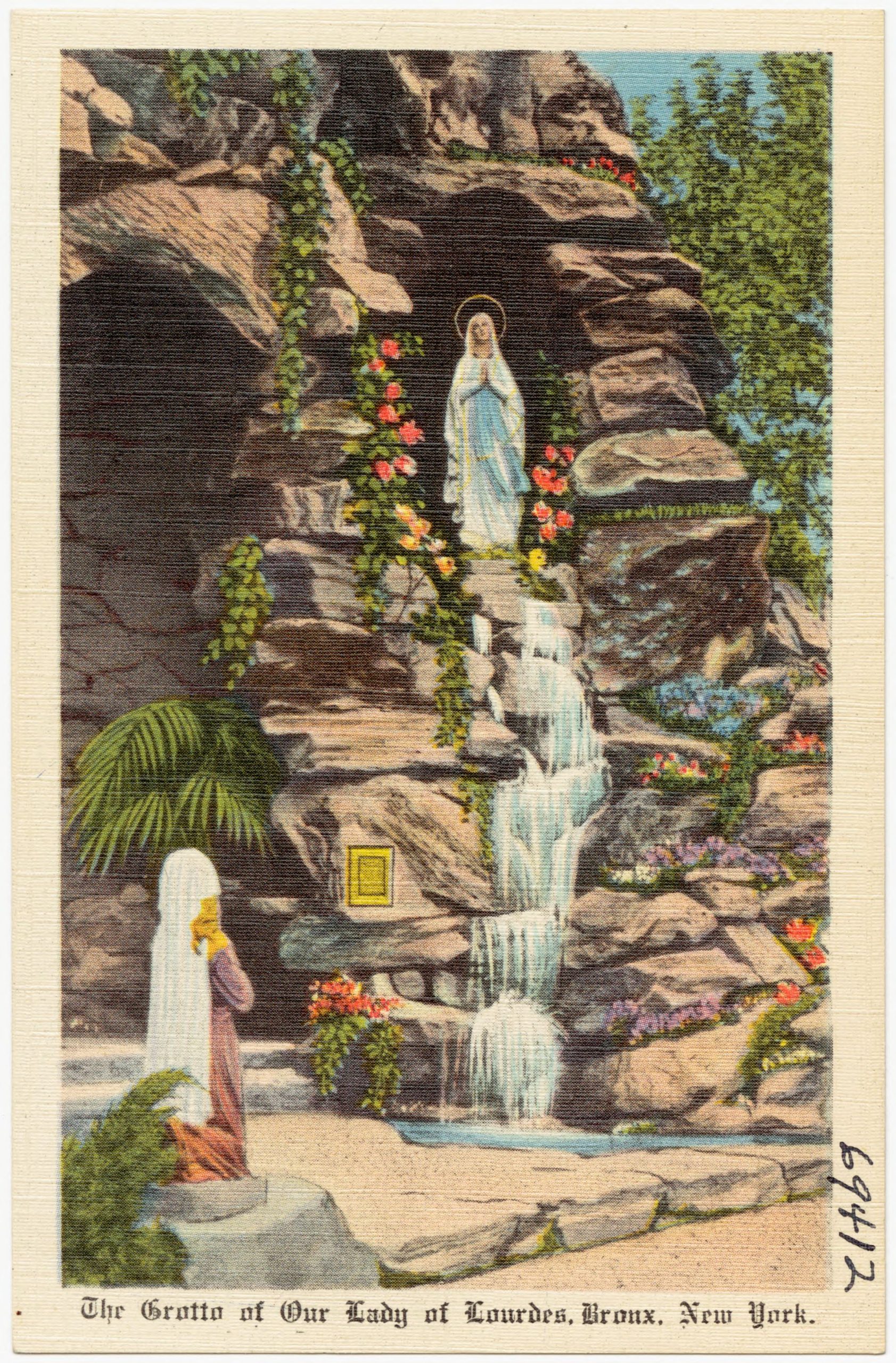
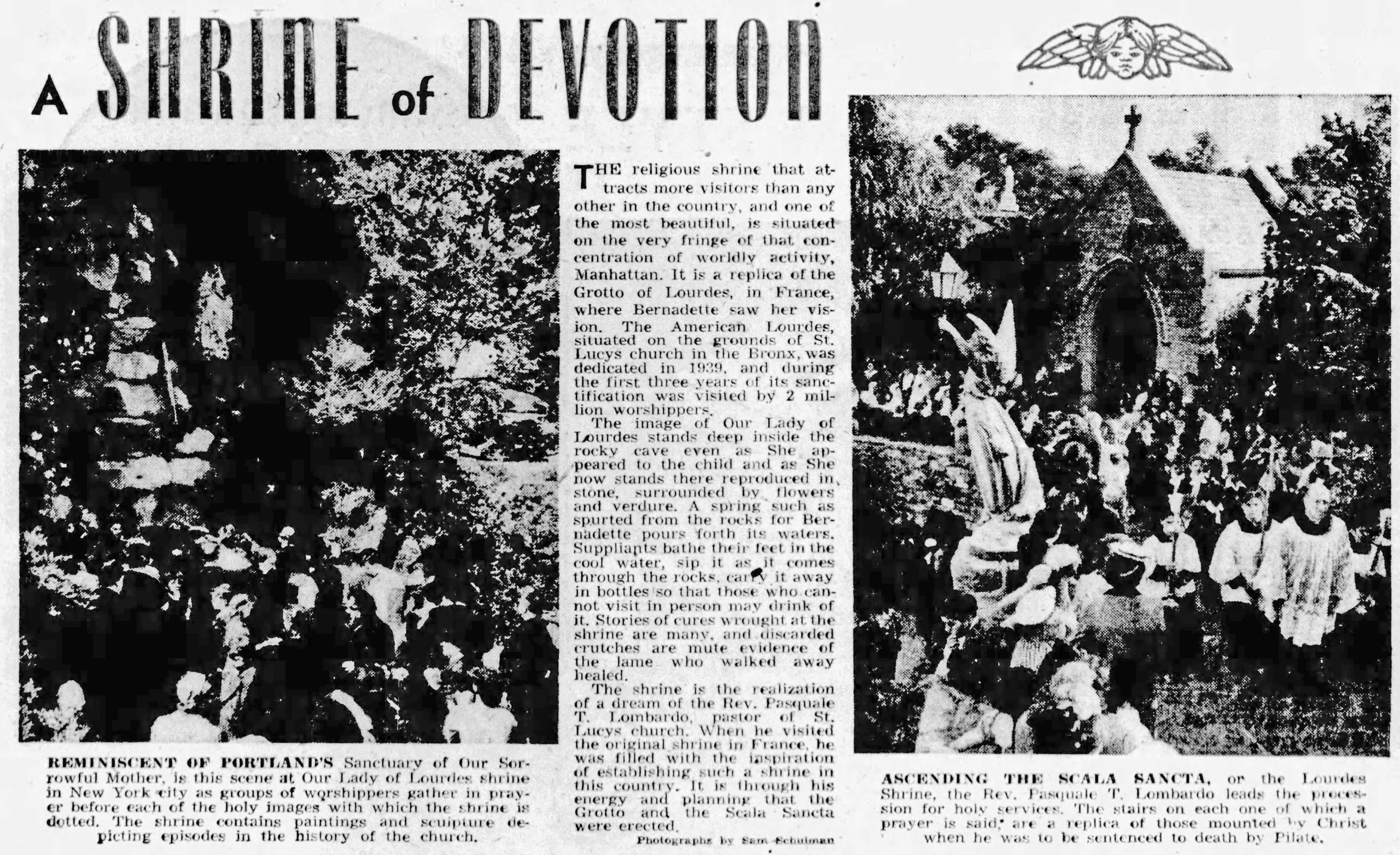
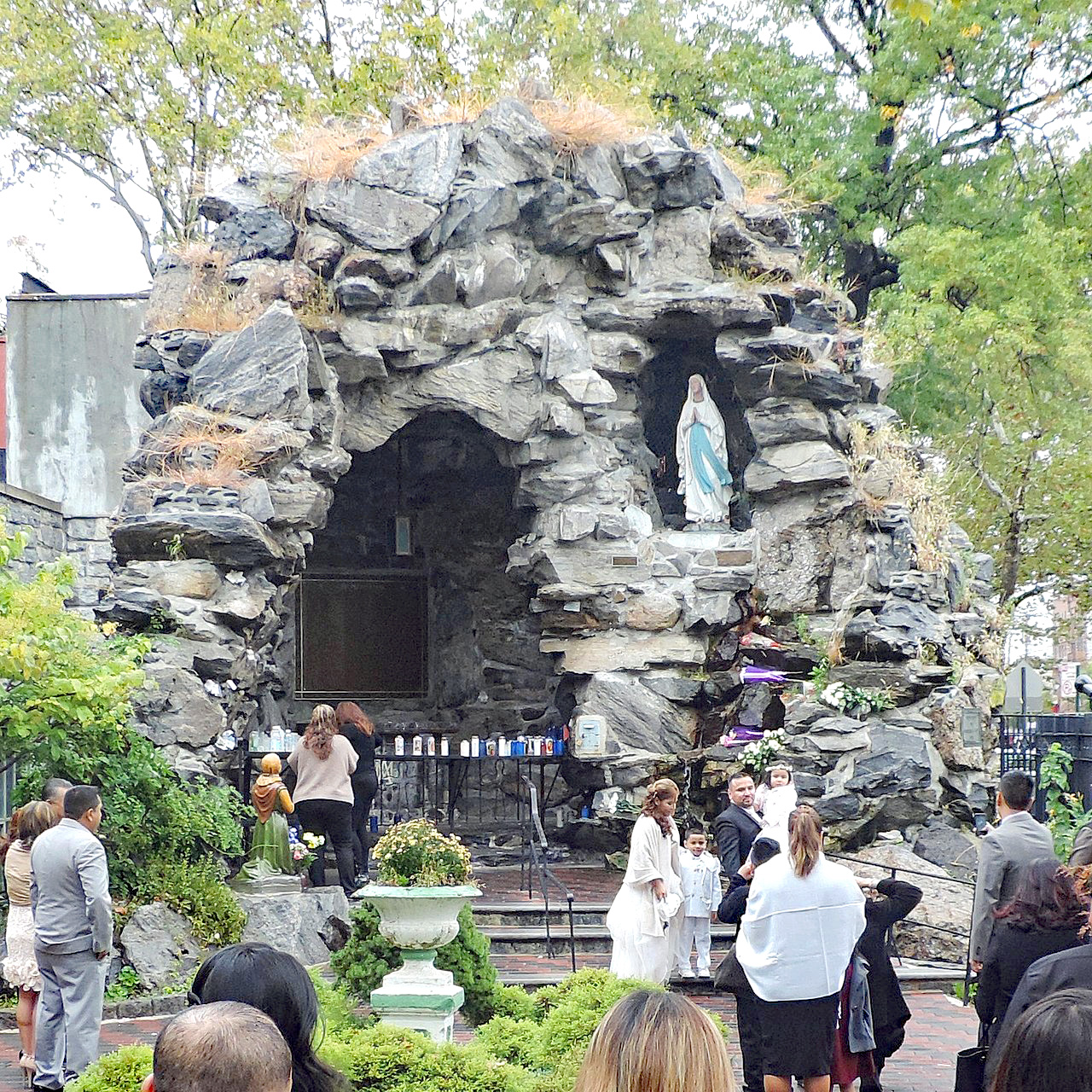
The newspaper article about the new grotto, above, states that more than 2,000 persons contributed money, materials or labor for the shrine. According to the church website, “The stones for the grotto were hand-cut by an Italian craftsman named Gino Brandolini. He immigrated from Italy and his family lived for three generations in the Bronx…. Msgr Lombardo hoped it would provide parishioners and outside visitors the possibility of experiencing the intimate and spiritual nature of the Lourdes grotto without making a transatlantic pilgrimage…. Our Lady of Lourdes Grotto is comprised of field stones stacked together forming a 30 foot high cave.”
The grotto has water flowing into a small pool. According to a later news article, the water originally came from a small natural spring nearby, although it was eventually supplied by municipal water.
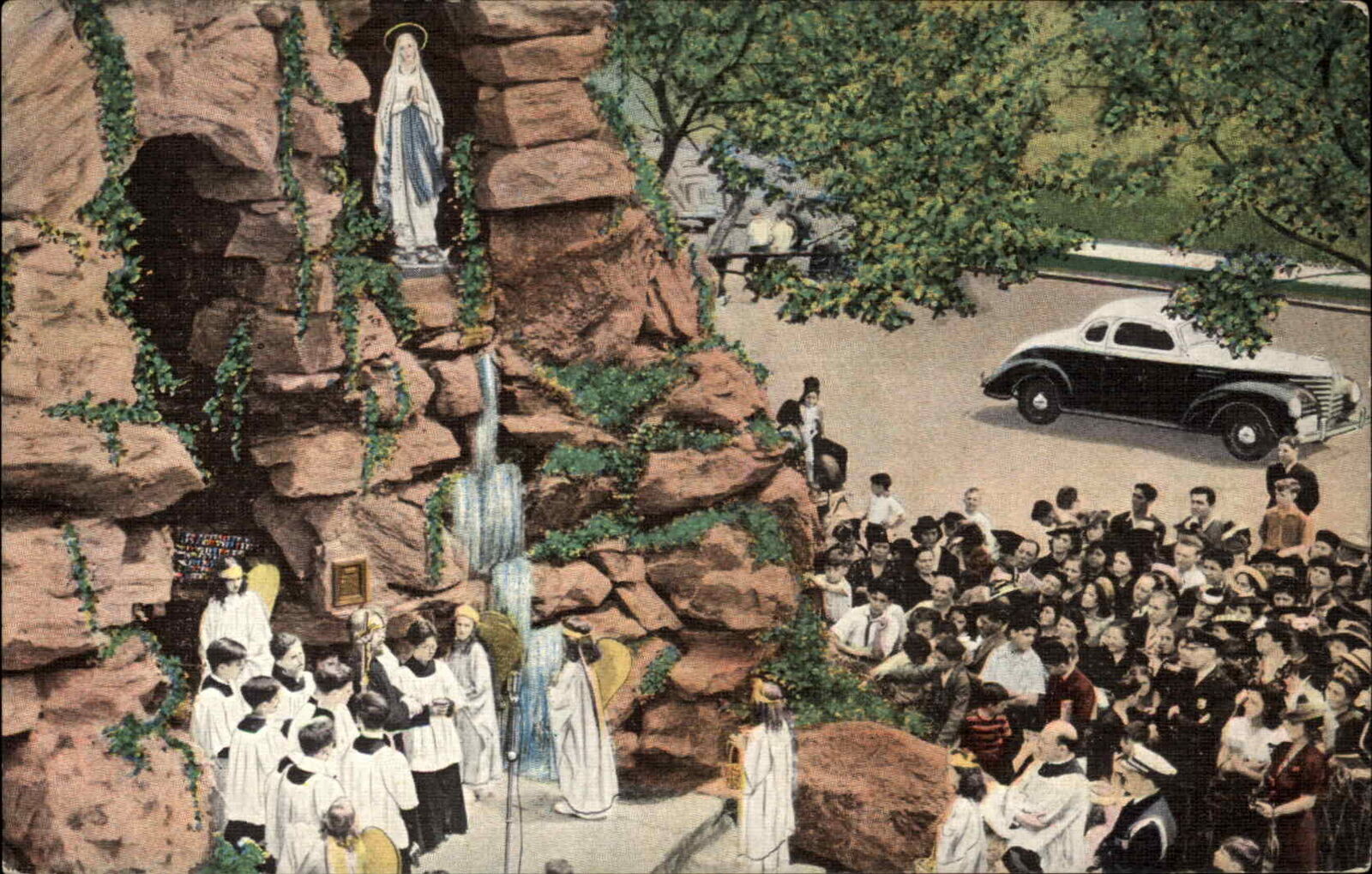
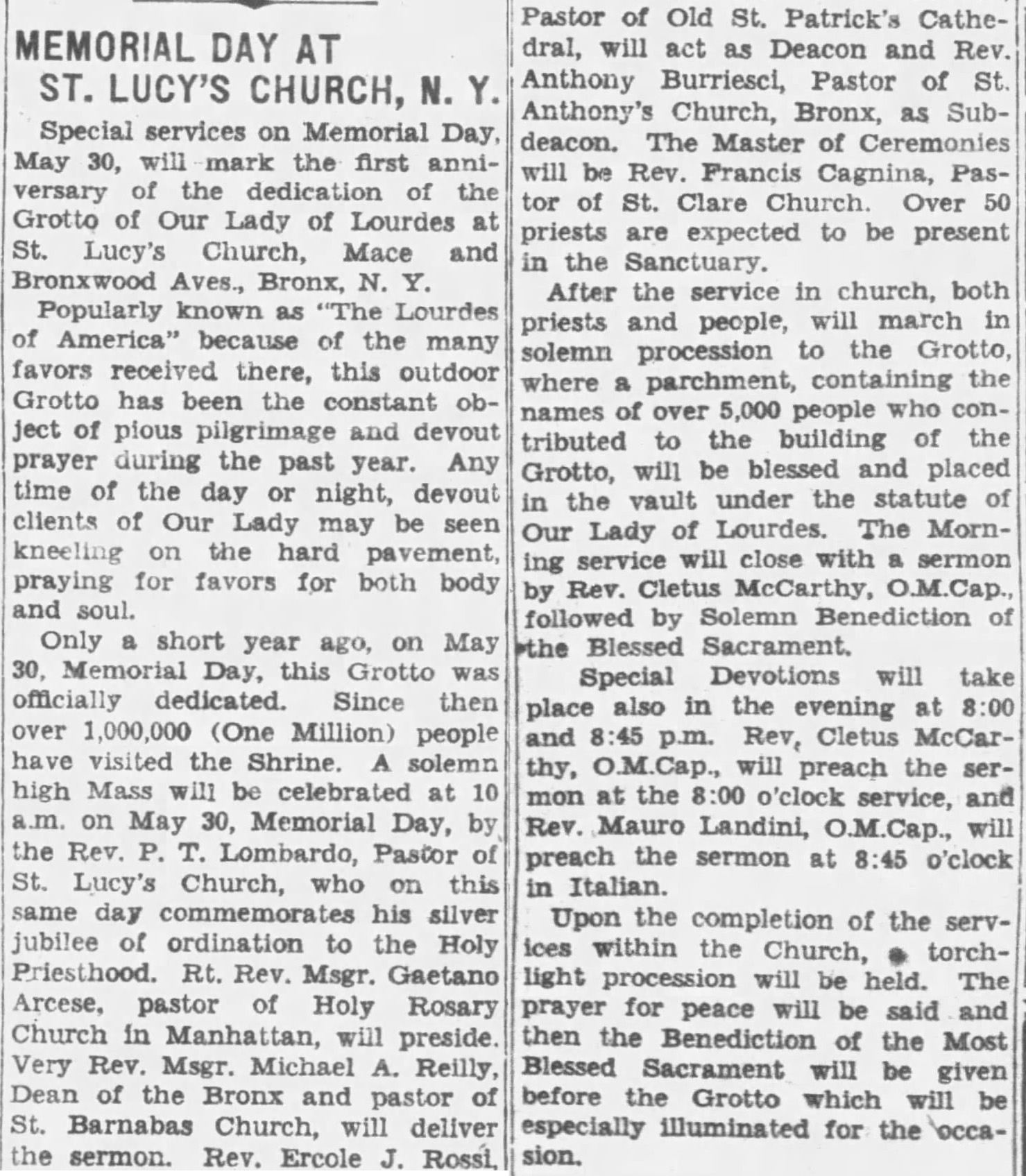
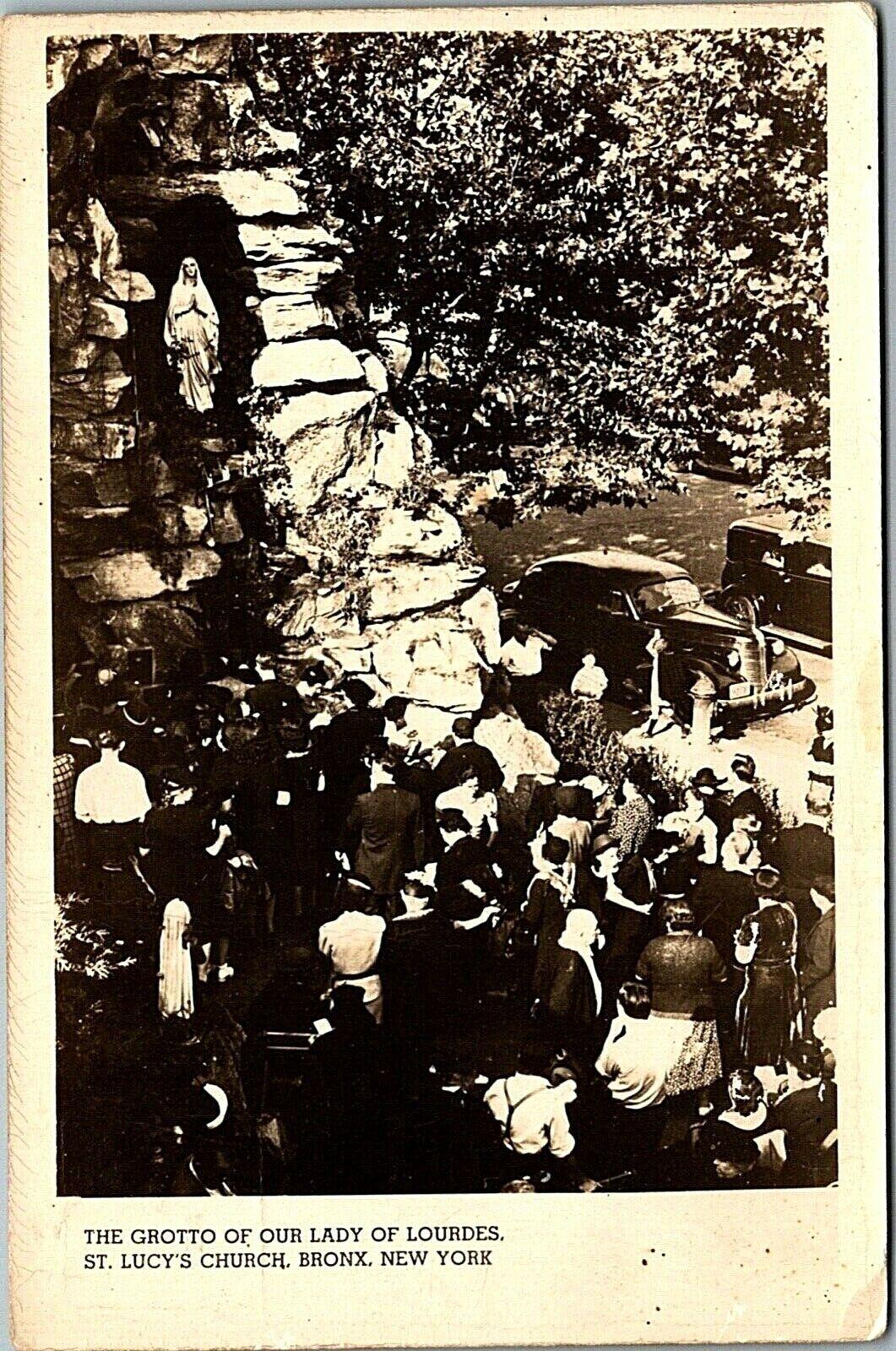
The grotto was dedicated on May 30, 1939 (also Decoration Day) by the Rt Rev. Monsignor Gaetano Arcese, with 10,000 people attending, according to the back of the first postcard at top. The sermon was given by Rev. Cletus McCarthy, O.M. Cap. (a Capuchin Franciscan of the Province of St. Mary).
Miraculous Healings
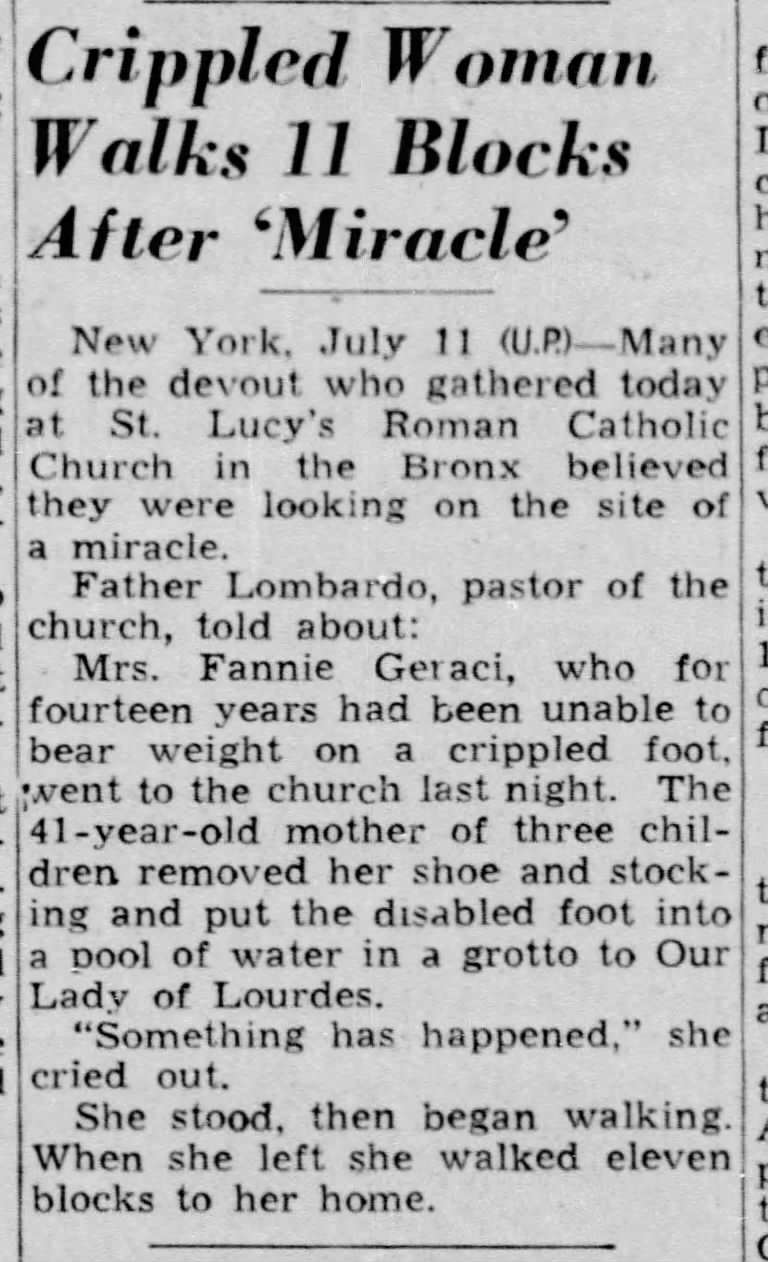
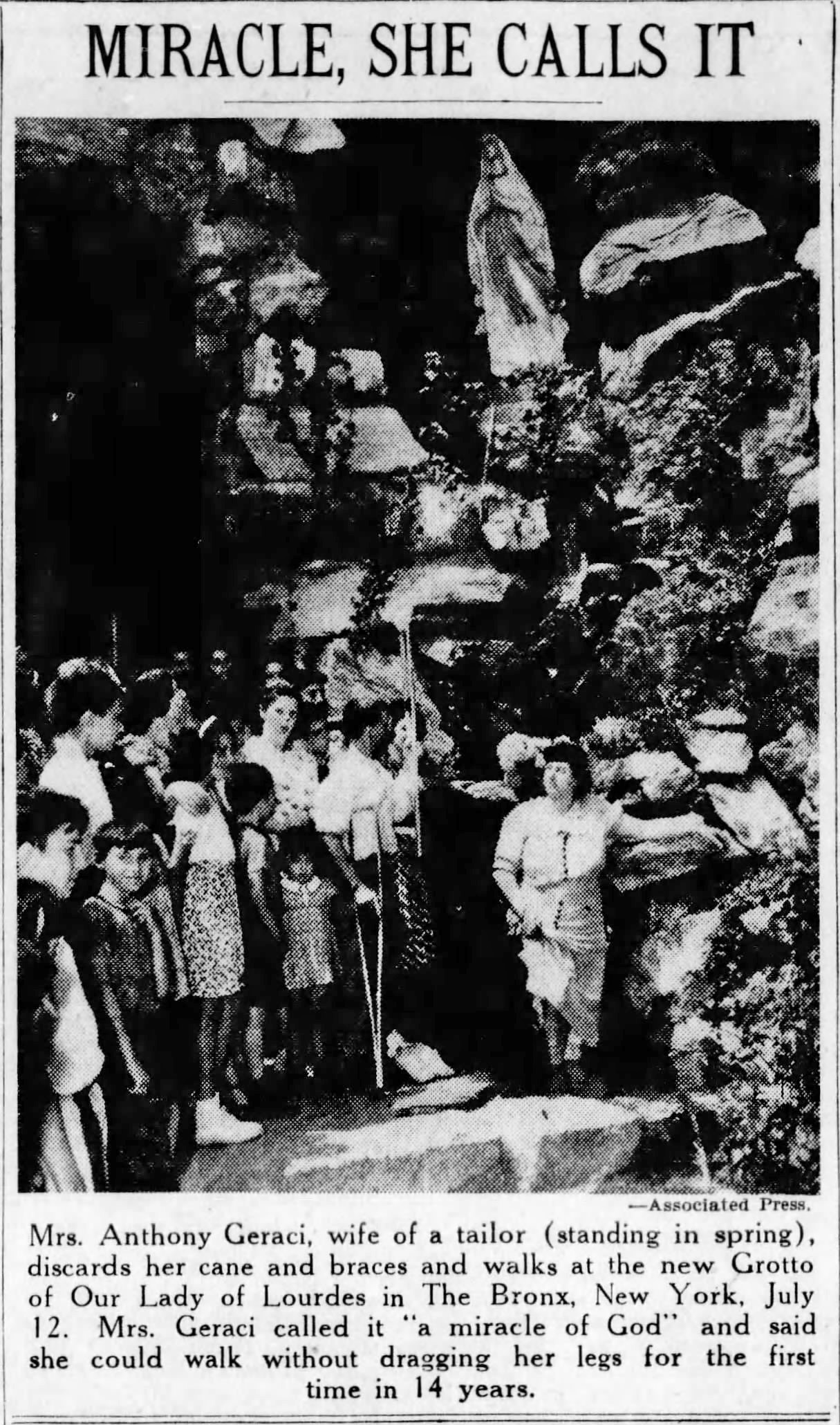
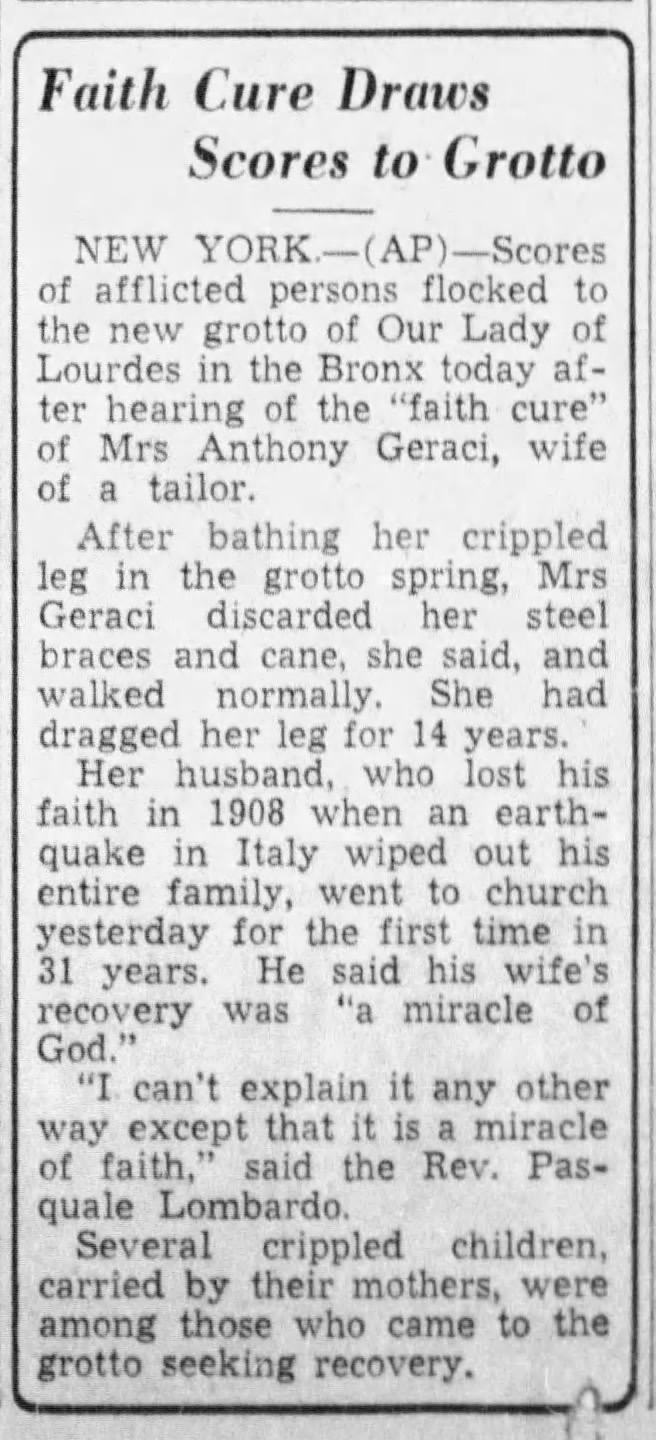
Within a few months of the dedication, at least two miraculous healings were reported in news articles: On July 11, 1939, a Mrs. Anthony Geraci, whose foot had been crippled for 14 years, was able to walk after bathing her foot in the grotto’s water:
Then four months later, a Mrs. Pasquale Patrono of Mount Vernon, NY, who had progressively lost her hearing over the previous 25 years, heard about that and other healings at the grotto. Over several months in 1939, she visited it numerous times and “asked constantly for divine aid,” and her petitions were granted: her hearing was suddenly and inexplicably restored.
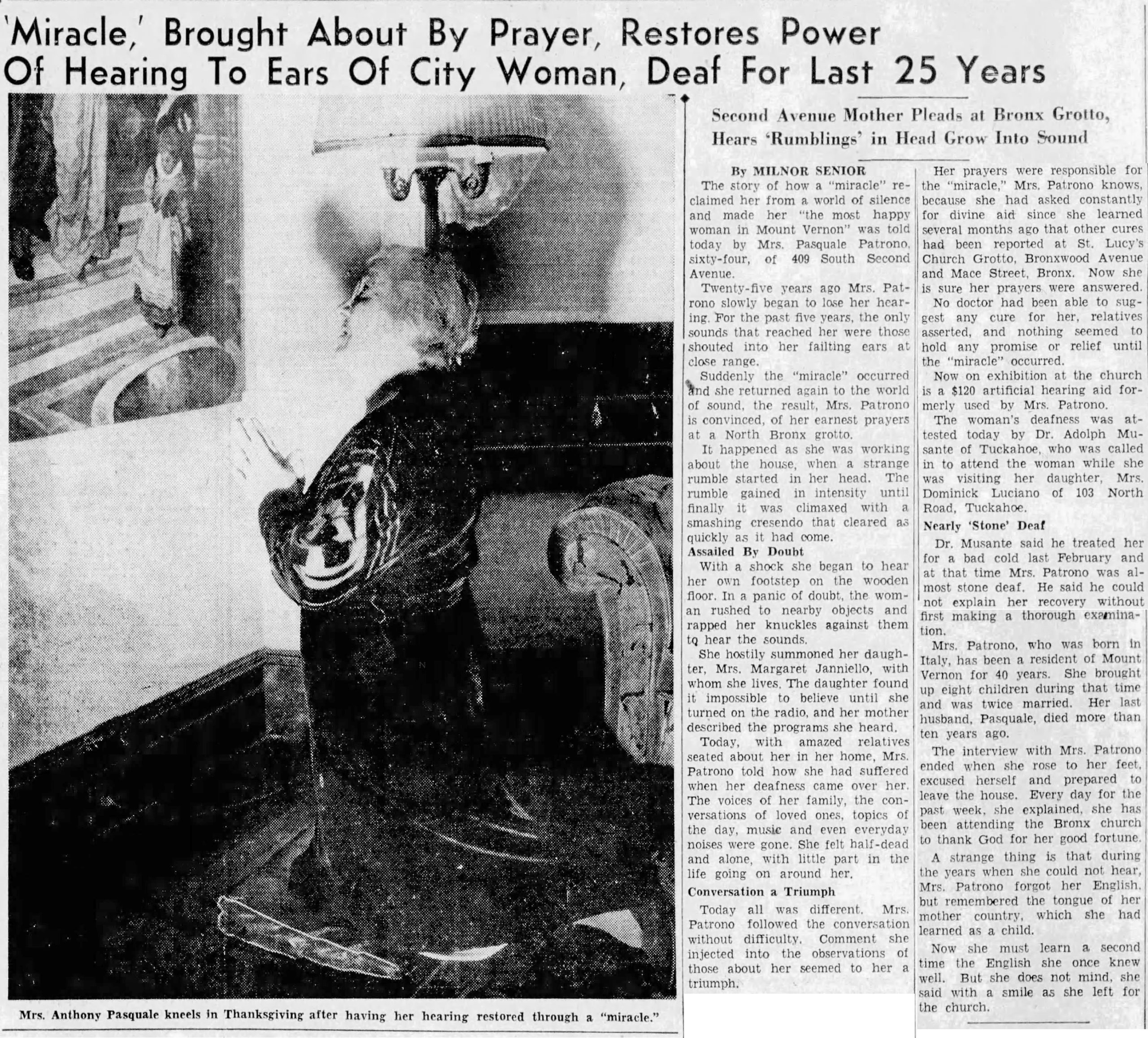
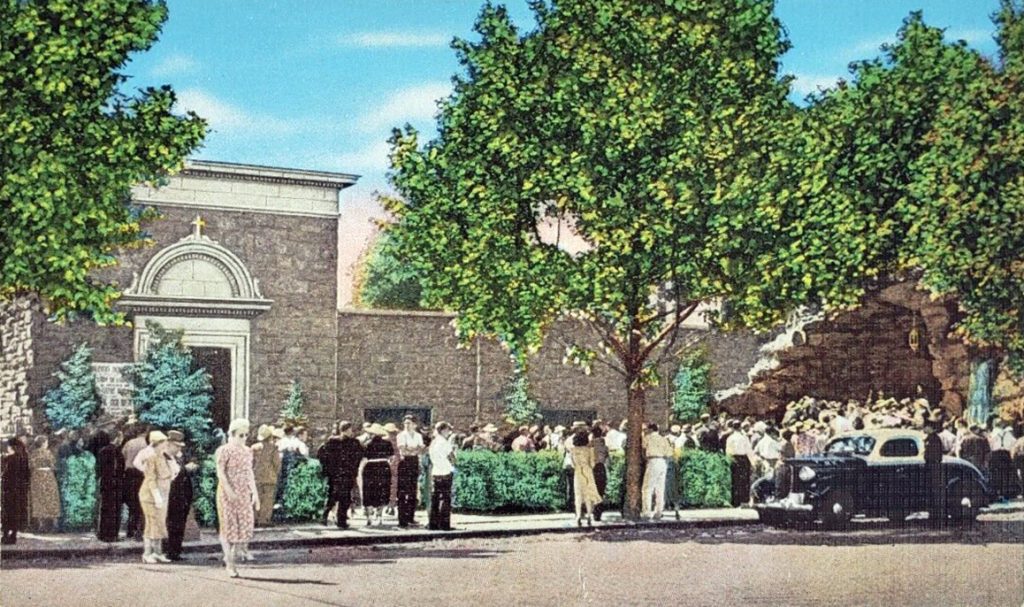
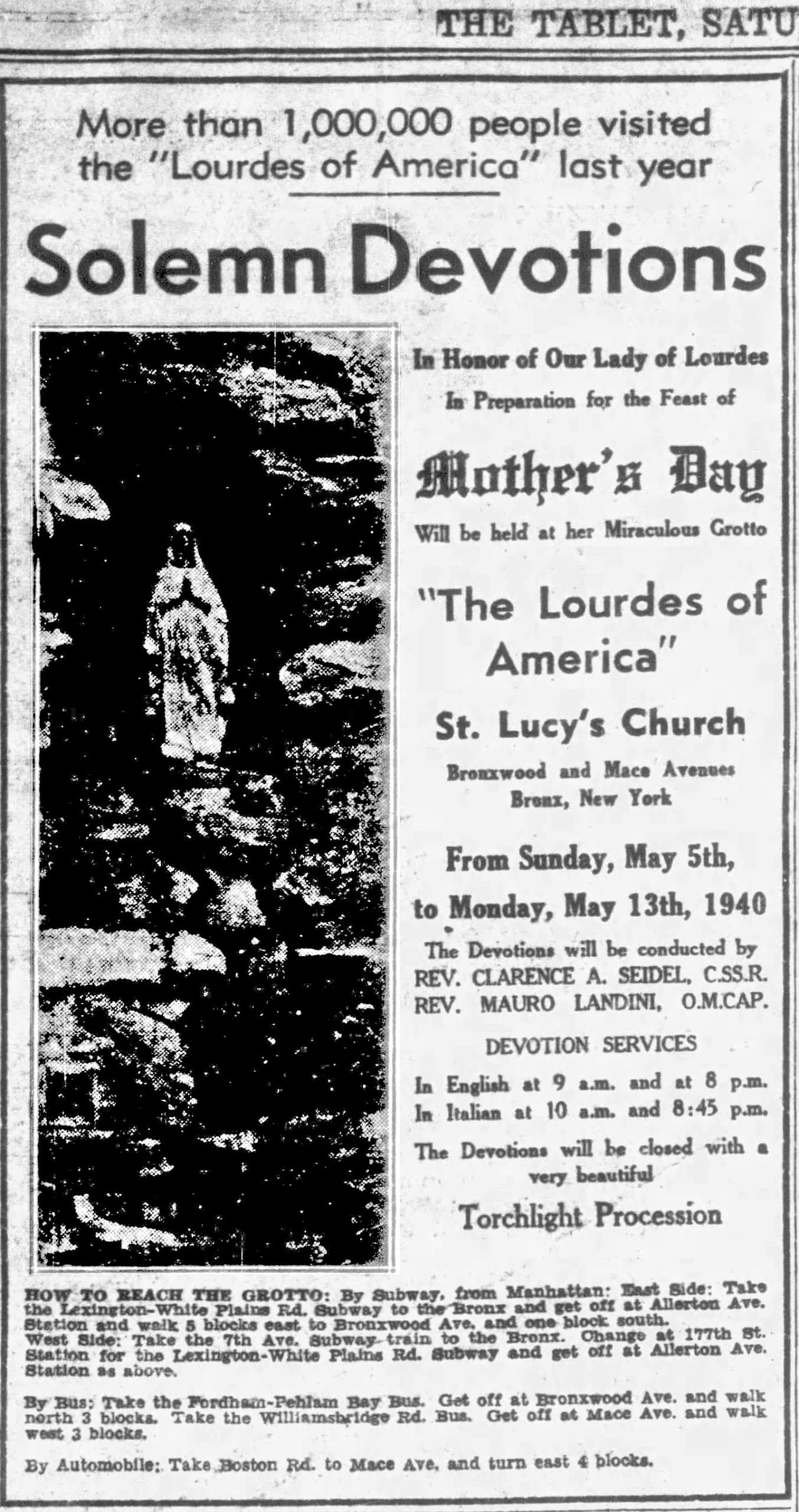
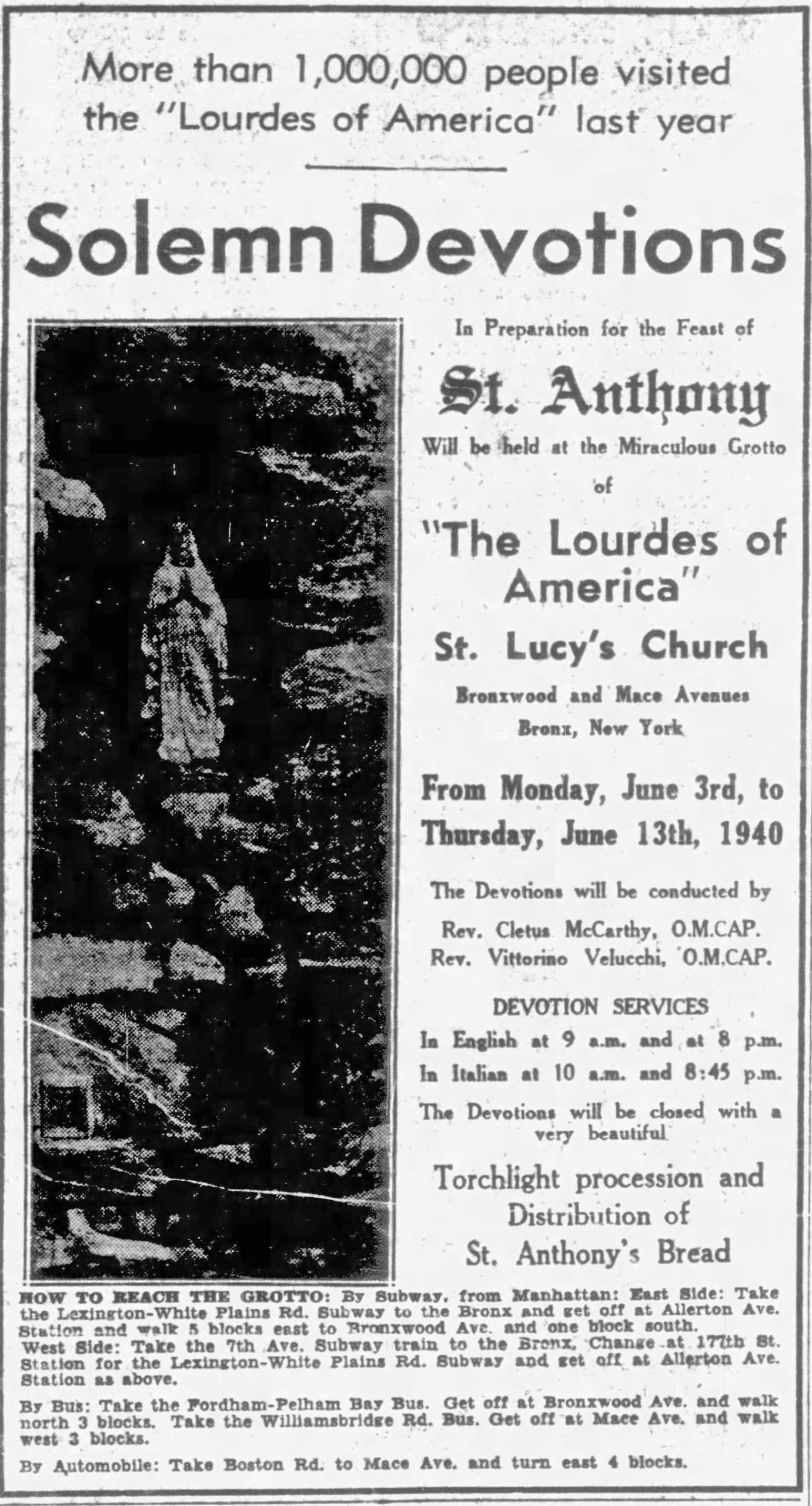
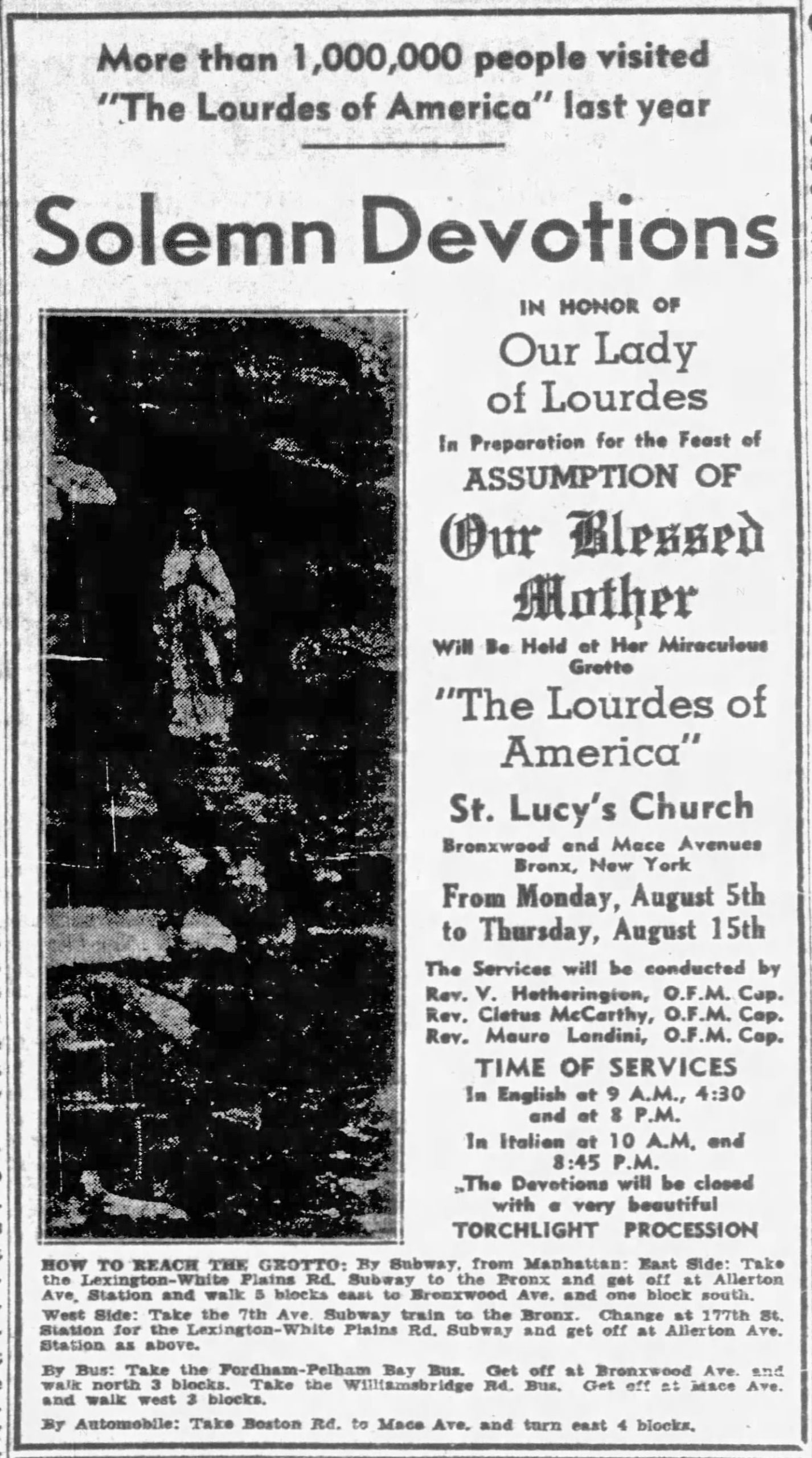
After that, word spread like wildfire and the grotto was deluged with tens of thousands of visitors. Newspapers of 1940 (see below) stated that “More than 1,000,000 people visited the ‘Lourdes of America’ Last Year.” Information on the backs of postcards published around 1940 state that “It is estimated that more than 25,000 people visit this wonderful shrine every week.”
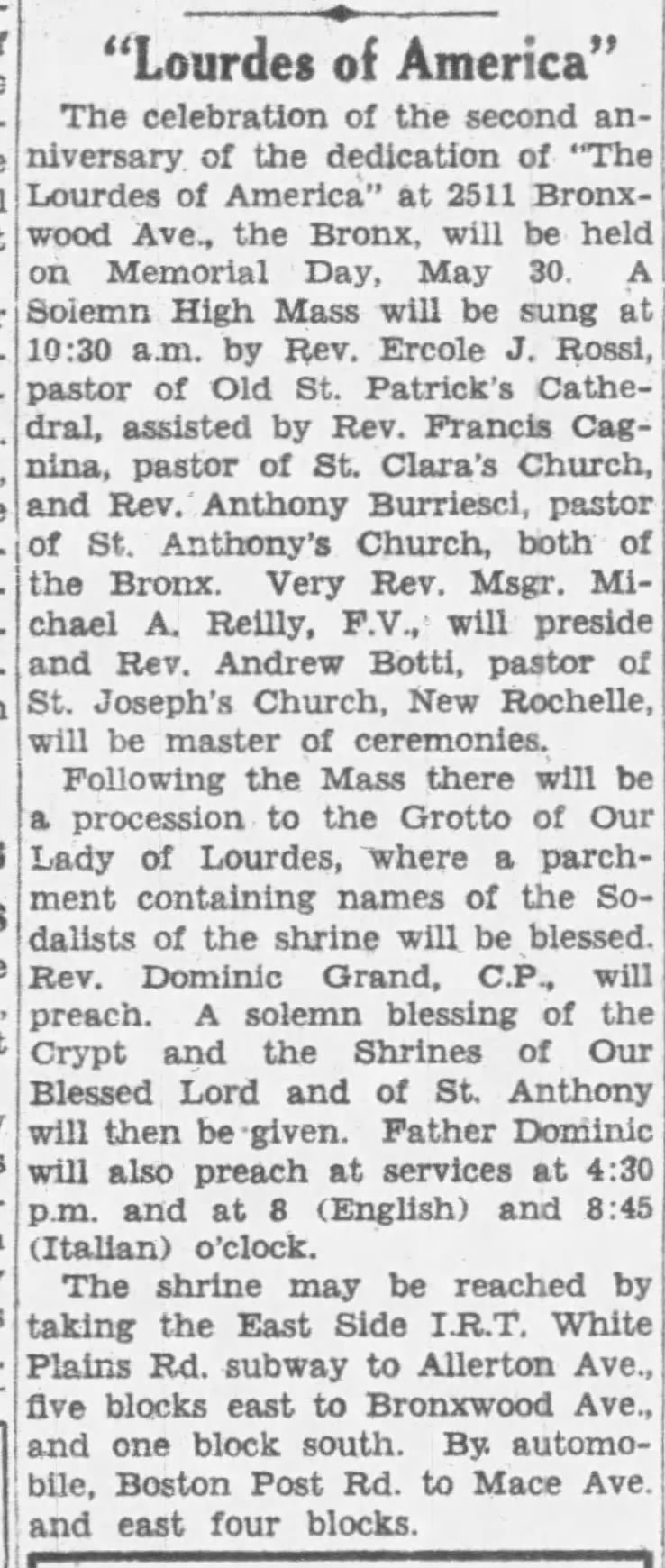
Rev. Lombardo held devotional events at the grotto a number of times each year: for Mother’s Day, the Feast of St. Anthony (an Italian Catholic feast day), Feast of the Assumption, the anniversaries of the dedication of the grotto, etc., and advertised these locally.
The Rev. Lombardo clearly understood something about marketing and had numerous postcards published about the grotto. These were probably sold in the gift shop next to the grotto, and undoubtedly raised needed money for St. Lucy Church.
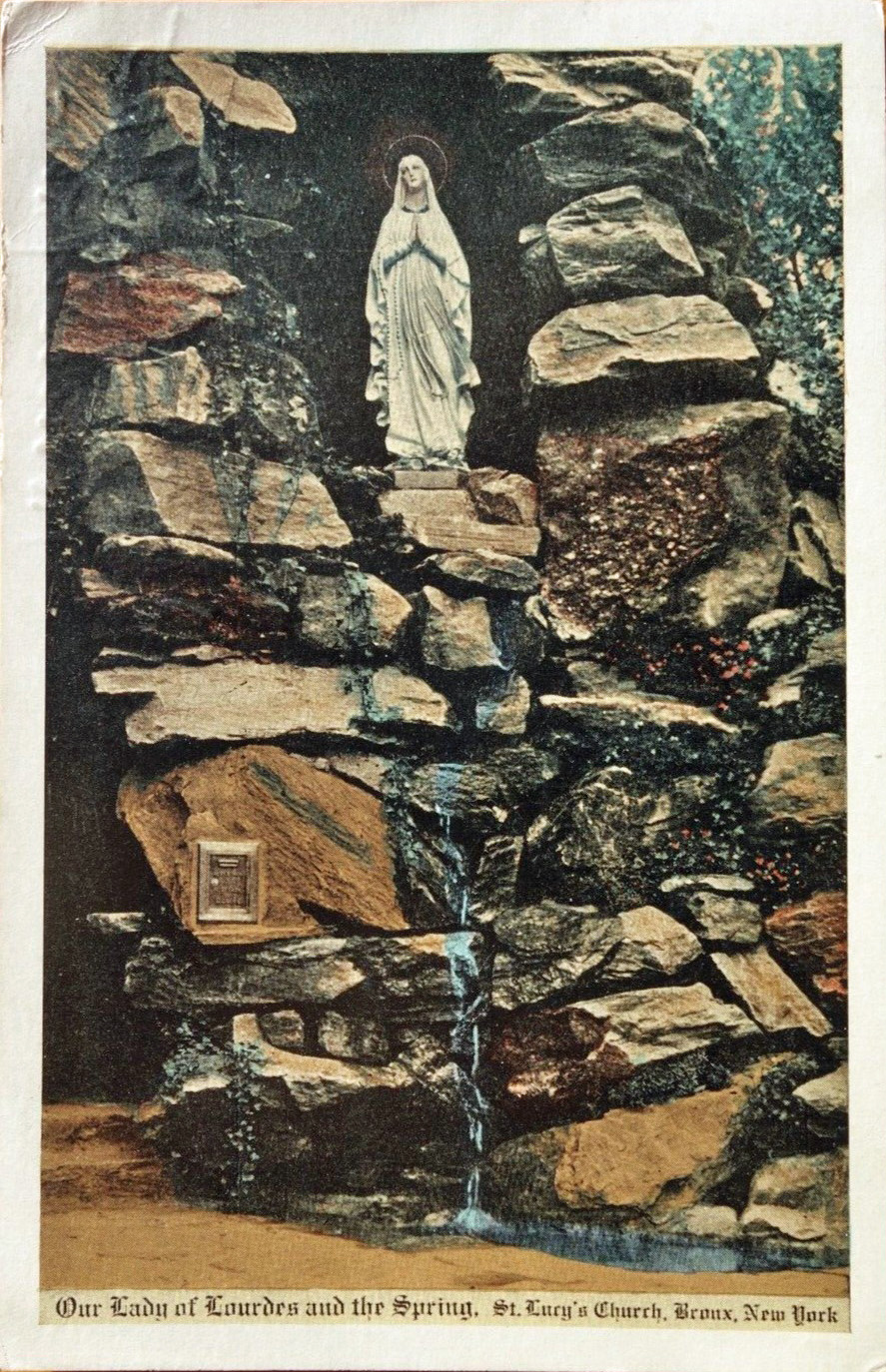
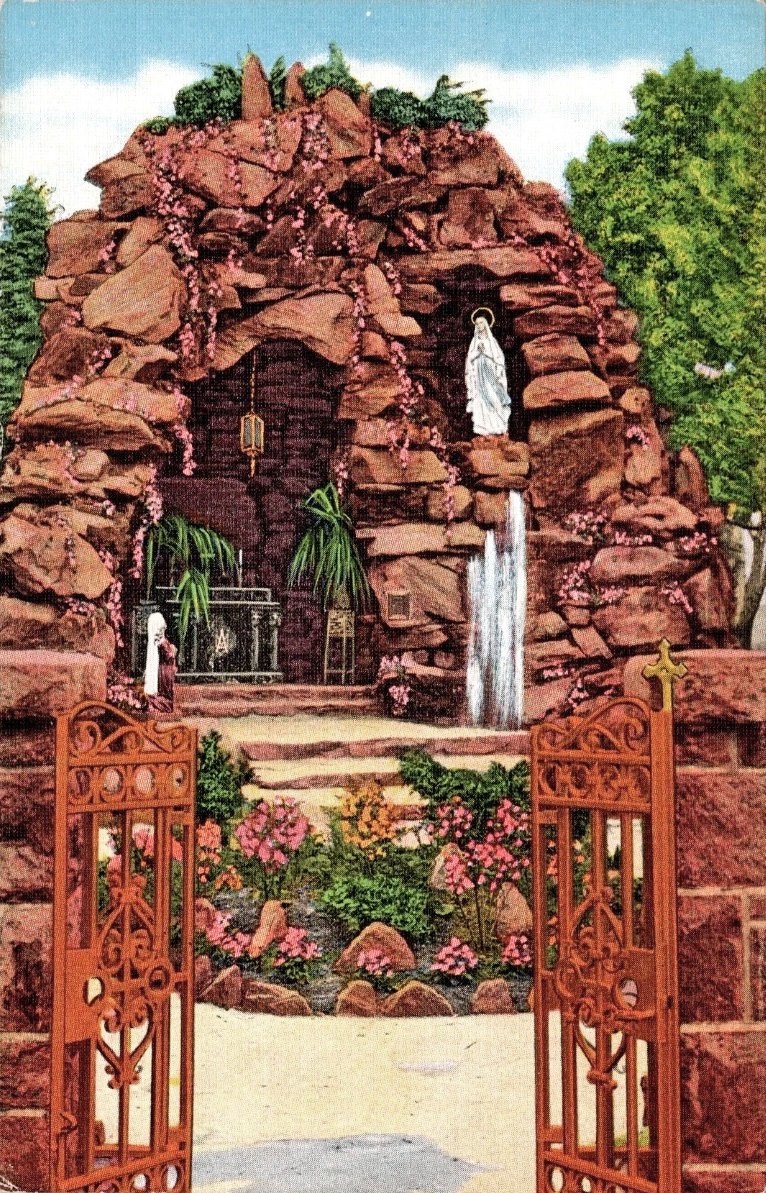
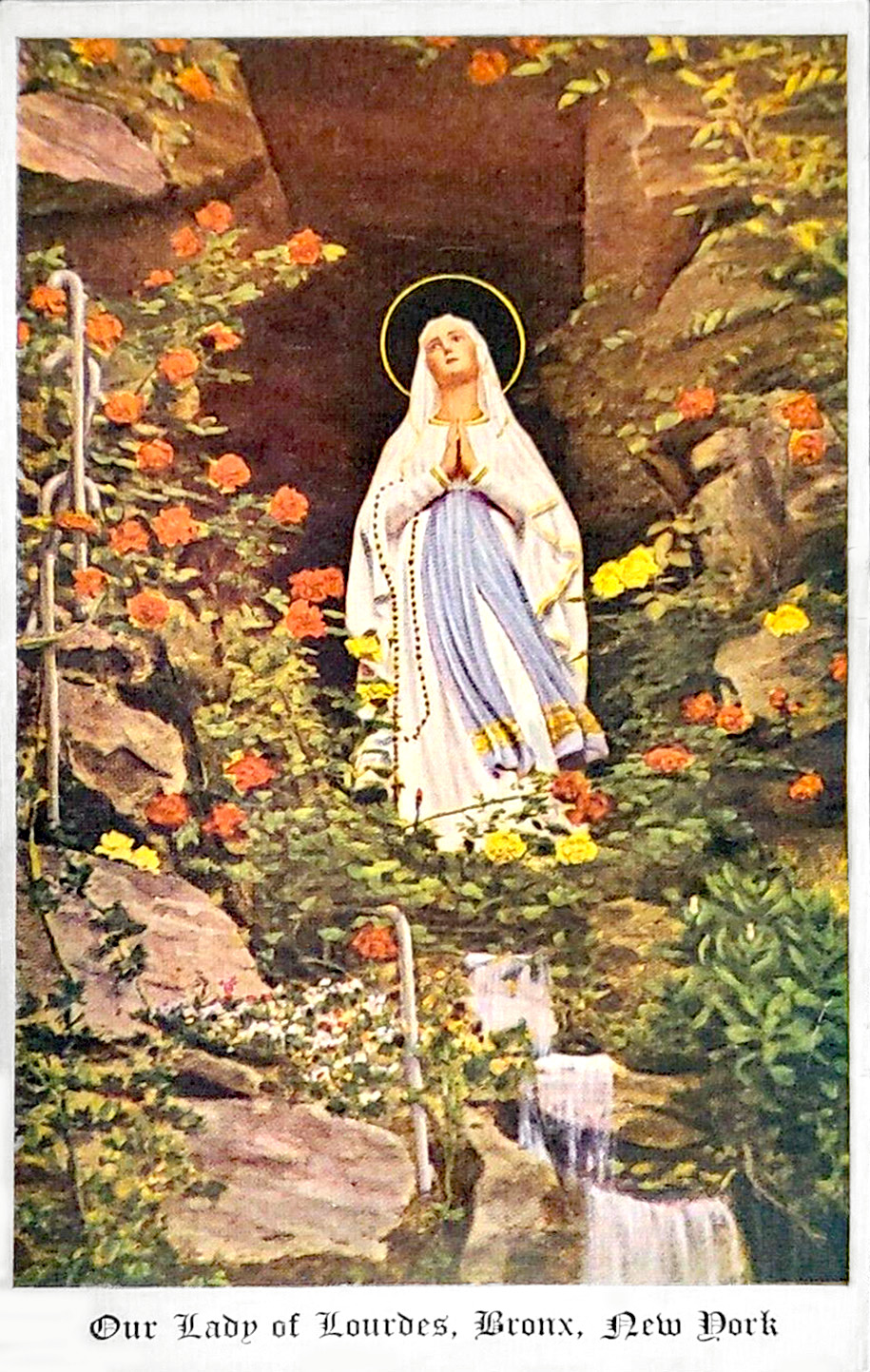
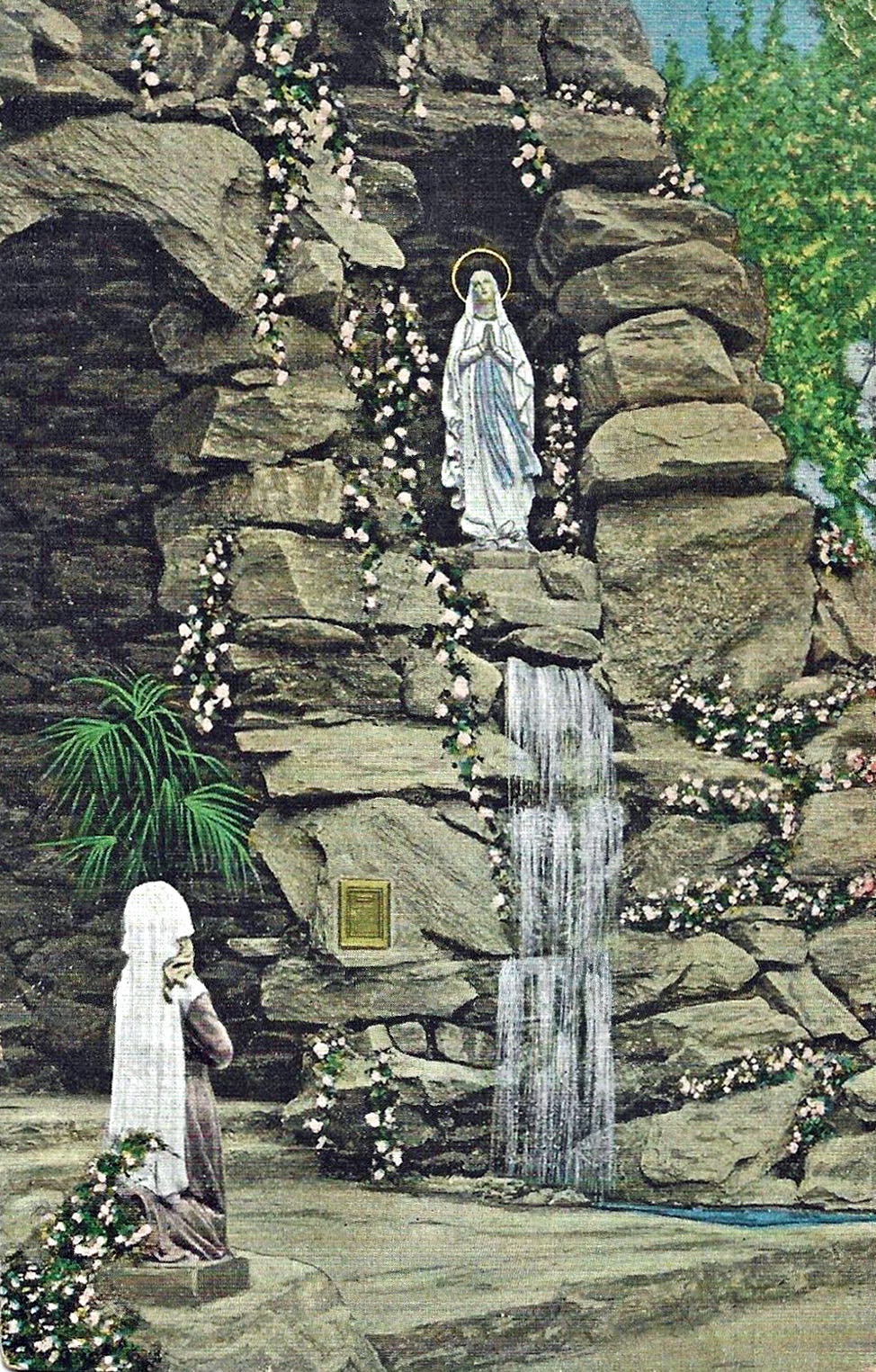
And Fr. Lombardo didn’t stop with the Lourdes Grotto; he also oversaw the construction of a complex of other stone grottos and religious features on an empty lot along the street behind the grotto. These include a Grotto of the Nativity, a replica of the catacombs at Rome, numerous statues of Italian saints, and a replica of the Holy Stairs (Scala Sancta), the 28 steps that Jesus Christ ascended in Jerusalem to the praetorium of Pontius Pilate. These steps were finished by October 1941, when they were mentioned in a letter to The Tablet. In keeping with the Italian heritage of the parish, fig trees were planted in this area, which still bear fruit today.
Likely after the 1960s, the grotto–or at least, the complex of other shines next to it–may have fallen into some disrepair. A 1987 article stated that
As time passed, the number of visitors fell and the shrine became the prey of vandals with spray paint who desecrated its statuary. Two years ago, St. Lucy’s present pastor, the Rev. Herbert D’Argenio, felt it was time to rescue his predecessor’s monument to his faith and restore it. Again, with the help and hard work of the parishioners of St. Lucy’s, the shrine was returned to its former grandeur. Today, once again, the shrine, which holds the only Catacombs in the United States, is attracting thousands of visitors.
The area with the other shrines is now fenced off to protect it and is not open to the public most of the time, unlike the Lourdes grotto.
In the 1990s and 2000s, several newspaper articles described other healings, as well as the thousands of visitors who make their way to the grotto at St. Lucy Church.
Today, after nearly 90 years, this special spot continues to be a place of prayer and petition to Our Lady among the faithful, just as Msgr. Lombardo planned it so beautifully.
(Wikimedia Commons)


You May Also Like
Chicago, IL: Longwood Academy of Our Lady
Tucson, AZ: Mission San Xavier Grotto